Posted on 1 Comment

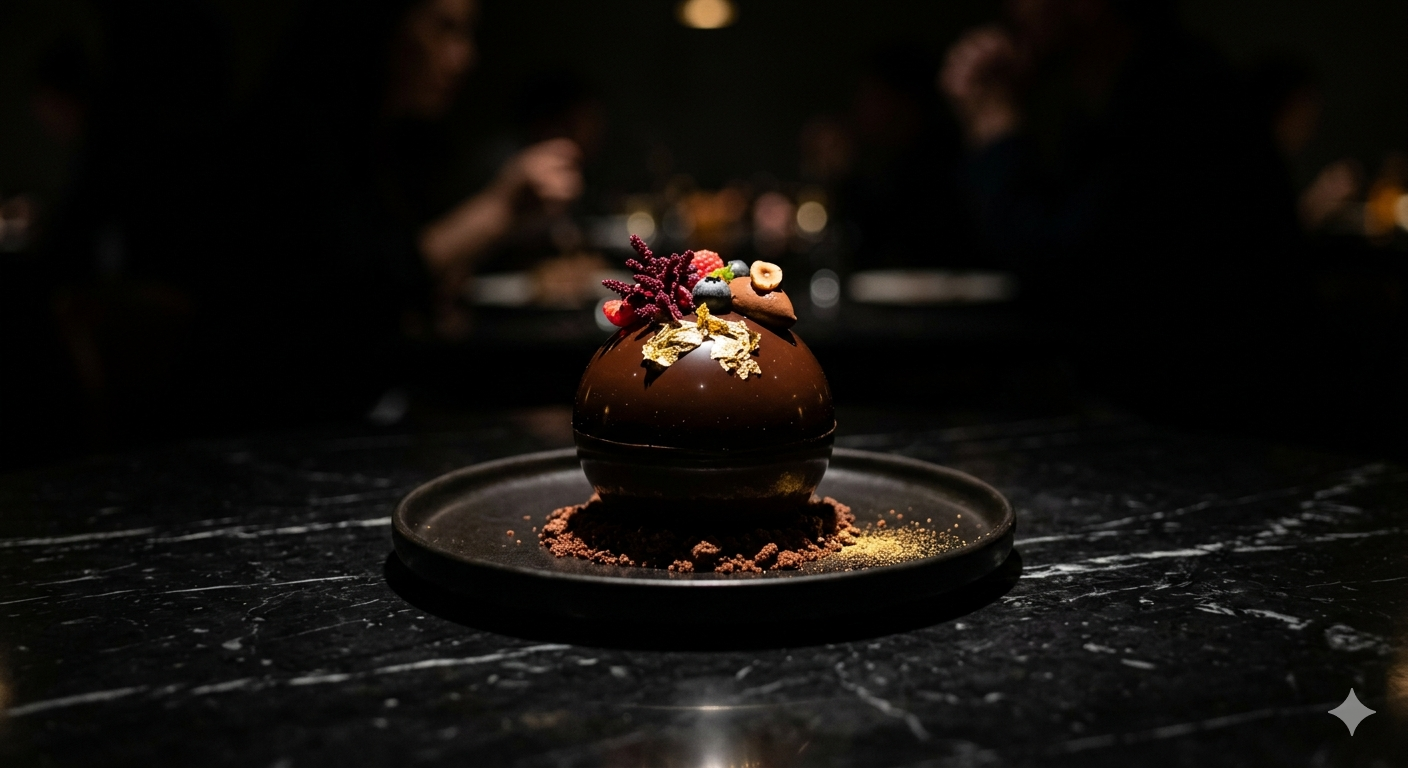
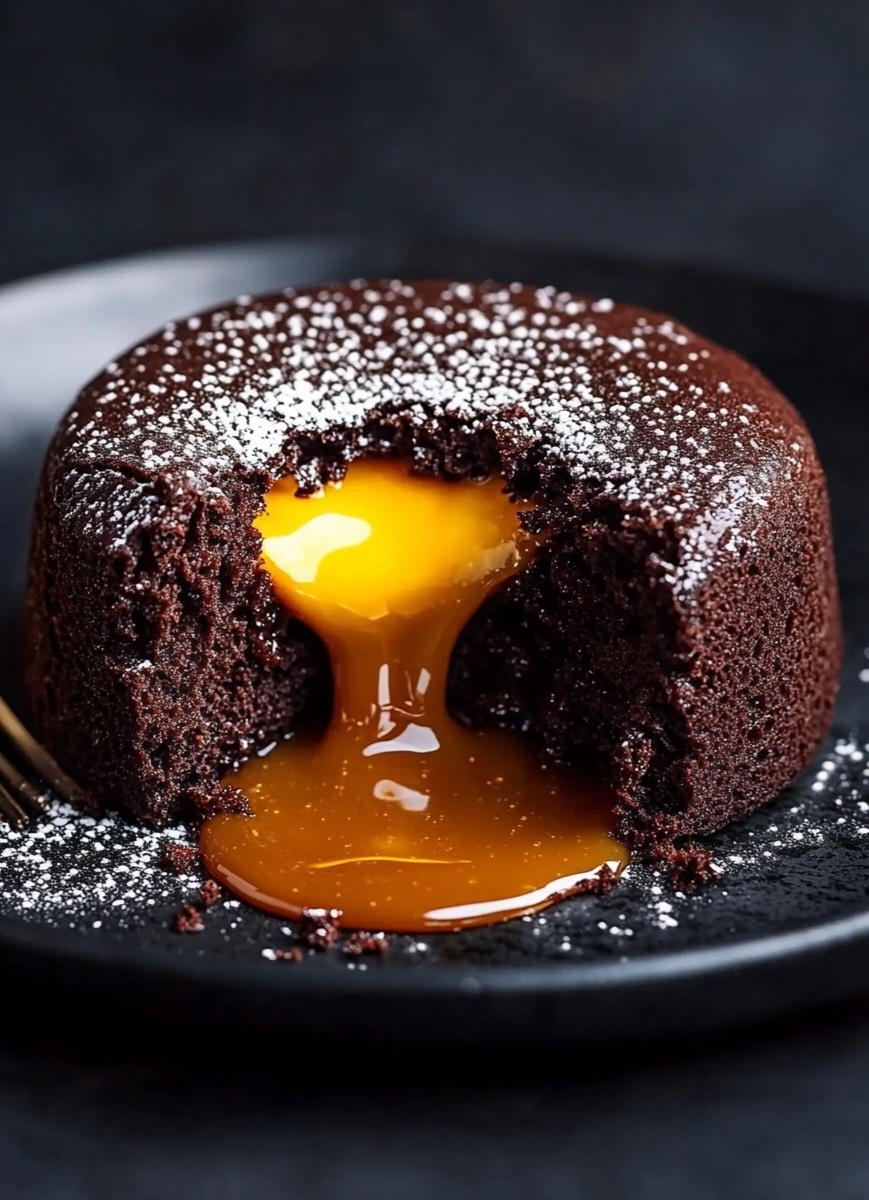
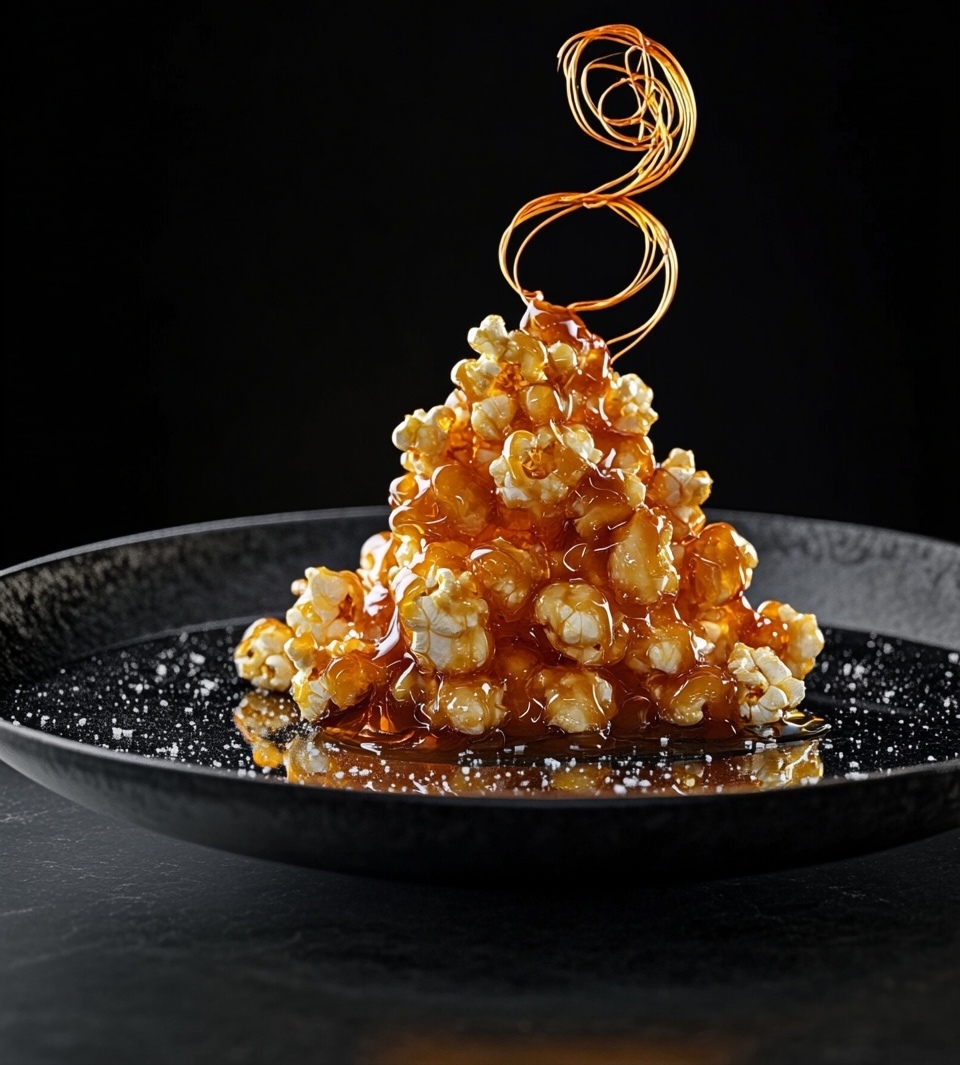
Popcorn Cinema Homage — Michelin Star Plated Dessert with Popcorn Ice Cream & Cherry Coke Curd

★ Michelin Star Series ★

The Popcorn Cinema Homage

Popcorn Ice Cream  ·  Chocolate Sponge  ·  Cherry Coke Curd  ·  Peppermint Chocolate Rocks  ·  Salted Caramel Powder

An elevated love letter to cinema nostalgia — every flavour and texture of the movie theatre experience, reimagined through the lens of Michelin fine dining.

⏱ Prep: 4 hours  ·  ⏲ Freeze: overnight  ·  🍿 Serves: 6  ·  ⭐ Difficulty: Expert

The Concept

Nostalgia is one of the most powerful flavour triggers in the human experience. The Popcorn Cinema Homage takes every sensory memory of the cinema — the hot butter and salt of popcorn, the carbonated sweetness of cola, the cool sting of peppermint, the crunch of chocolate — and rebuilds each one using professional pastry techniques that elevate the familiar into the extraordinary.

The salted caramel powder, made using N-Zorbit M (a tapioca-based fat absorber), is the showpiece — dry and free-flowing at room temperature, it dissolves on the tongue into pure, liquid caramel. The peppermint chocolate rocks shatter. The Cherry Coke curd fizzes on the palate. This is sensory theatre.

It is childlike and sophisticated in equal measure. That is the point.

Ingredients

01 — Popcorn Ice Cream

500ml whole milk
200ml double cream
80g fresh popcorn (salted butter)
6 egg yolks
140g caster sugar
1 tsp vanilla extract

02 — Chocolate Sponge

3 eggs
90g caster sugar
60g plain flour
30g dark cocoa powder
30g unsalted butter, melted
Pinch of salt

03 — Cherry Coke Curd

200ml Coca-Cola (reduced to 80ml)
100ml Morello cherry juice
3 egg yolks
60g caster sugar
80g unsalted butter, cold & cubed
1 tsp citric acid

04 — Peppermint Chocolate Rocks

200g dark chocolate (70%)
1 tsp peppermint oil (food grade)
iSi siphon + 2 N₂O cartridges
2 gelatine leaves
100ml double cream

05 — Salted Caramel Powder

150g caster sugar
50ml double cream
30g unsalted butter
1 tsp Maldon sea salt
60g N-Zorbit M (tapioca maltodextrin)

The Method

Step 01 — Popcorn Ice Cream (night before)

Heat milk and cream to a simmer. Add warm popcorn and infuse off the heat for 25 minutes. Strain, pressing hard to extract all the buttery, savoury flavour. Discard the popcorn. Make a crème anglaise base with yolks and sugar (cook to 82°C). Combine with infused milk, cool over ice, churn, and freeze overnight.

Step 02 — Chocolate Sponge

Preheat oven to 180°C. Whisk eggs and sugar over a bain-marie until warm, then whip on a stand mixer to ribbon stage (6–8 minutes). Sift flour, cocoa and salt, fold in gently. Add melted butter last, fold until just incorporated. Spread thinly on a lined baking tray. Bake 8–10 minutes until just set. Cool. Cut into rectangles using a 6x3cm cutter.

Step 03 — Cherry Coke Curd

Reduce Coca-Cola in a saucepan to a syrup of 80ml — this concentrates the cola flavour dramatically. Whisk with cherry juice, yolks, and sugar in a bain-marie until thickened (83°C). Off heat, whisk in cold butter piece by piece until emulsified. Stir in citric acid. Pass through a fine sieve, cool with cling film pressed on the surface. Pipe into small rounds using a piping bag.

Step 04 — Peppermint Chocolate Rocks (Aero Method)

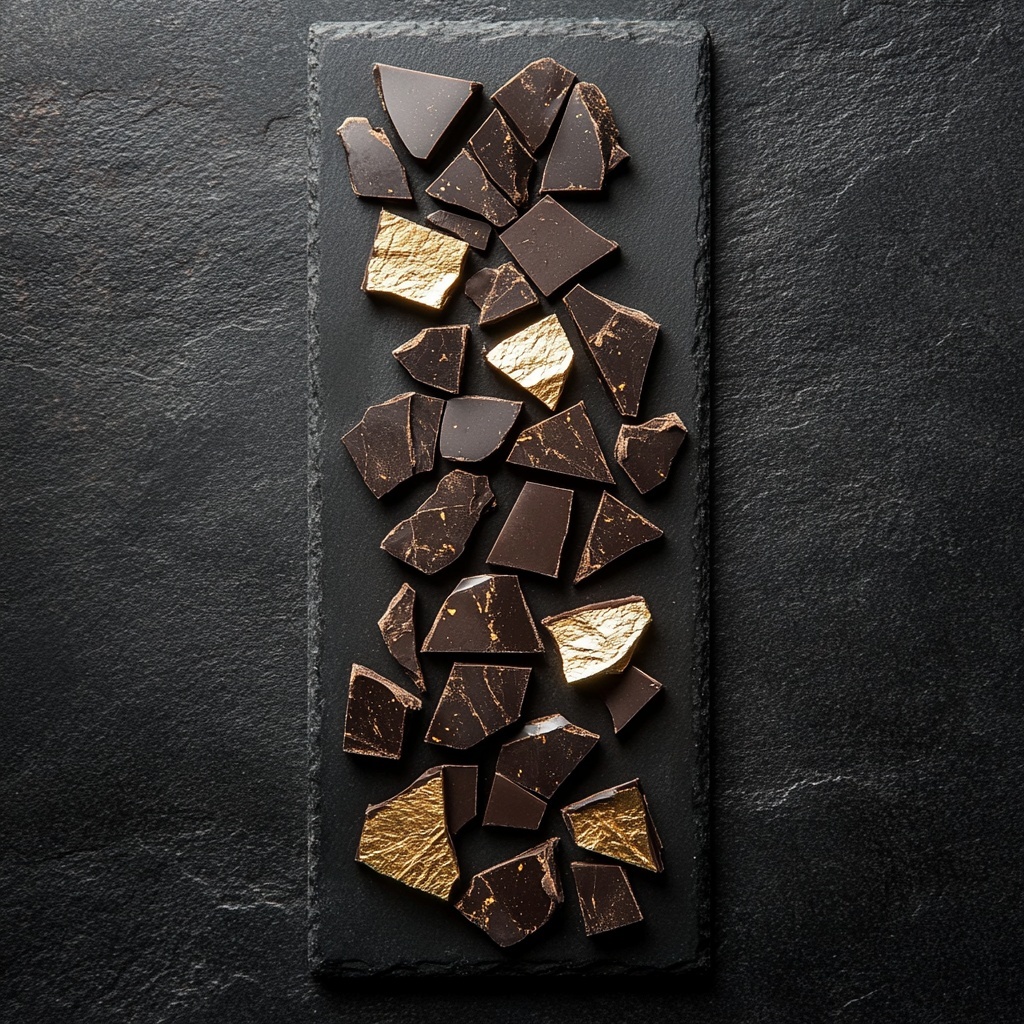
Melt chocolate with cream and bloomed gelatine. Cool to 35°C. Add peppermint oil — start with 3 drops and taste. Pour into an iSi siphon, charge twice, dispense into a container and freeze immediately. Once solid, break into irregular shards. Keep frozen until plating.

Step 05 — Salted Caramel Powder (N-Zorbit M)

Make a dry caramel to amber. Deglaze carefully with cream, stir in butter and salt. Cool to room temperature. Place N-Zorbit M in a food processor. With the motor running, slowly pour the caramel in a thin stream. The fat absorber converts the liquid into a dry, scoopable powder. Store in an airtight container.

Step 06 — Plating (The Cinema Experience)

Place the chocolate sponge rectangle as the base. Pipe three rounds of Cherry Coke curd alongside it. Arrange three peppermint chocolate rocks in a cluster. Quenelle the popcorn ice cream and set it on the sponge. Drift the salted caramel powder over the plate in a sweeping arc. Finish with two pieces of real popcorn placed on top of the ice cream quenelle.

Understanding N-Zorbit M

What It Is

N-Zorbit M is tapioca maltodextrin — a fat-absorbing starch that converts fat-based liquids into dry powders without losing flavour.

The Ratio

Start with a 60:40 ratio of N-Zorbit to liquid fat. Adjust by adding more N-Zorbit if the mixture stays sticky, or more liquid if too dry.

On The Tongue

The powder dissolves the moment it makes contact with saliva, flooding the palate with the original liquid flavour. It is one of the most dramatic textural effects in molecular gastronomy.

Other Uses

Foie gras powder, olive oil powder, peanut butter powder — any fat-based liquid can be transformed. It is one of the most versatile tools in the modern pastry kitchen.

⭐ Michelin Star Series

Explore the Full Collection

All Recipes →
Posted on 1 Comment

Dulcey & Hazelnut Dessert Recipe — Michelin Star Multi-Texture Plated Dessert

★ Michelin Star Series ★

Dulcey & Hazelnut Architecture

Dulcey Mousse  ·  Hazelnut Crémeux  ·  Dulcey Aero  ·  Hazelnut Tuile  ·  Hazelnut Ice Cream

A multi-textured masterpiece that takes a single, extraordinary ingredient — the hazelnut — and explores every state it can achieve: creamy, aerated, frozen, crisp, and molten.

⏱ Prep: 4 hours  ·  ⏲ Freeze: overnight  ·  🌰 Serves: 6  ·  ⭐ Difficulty: Expert

The Philosophy

The greatest Michelin desserts are not collections of ingredients — they are arguments about a single idea. Dulcey & Hazelnut Architecture is an argument about one thing: the hazelnut, and how many forms of pleasure it is capable of delivering simultaneously.

Valhona’s Dulcey chocolate — blond, caramelised, biscuity — is the perfect amplifier for hazelnut’s roasted depth. Together they appear here as a cloud-light mousse, a dense silky crémeux, an aerated chocolate called Aero, a gossamer tuile, and a pale golden ice cream. Five preparations. One ingredient. One plate.

This is architecture. Every element must be in its place, or the whole edifice collapses.

Ingredients

01 — Dulcey Mousse

200g Valhona Dulcey chocolate
3 egg yolks
60g caster sugar
100ml whole milk
350ml double cream (whipped to soft peaks)
2 gelatine leaves

02 — Hazelnut Crémeux

150g toasted hazelnut paste
4 egg yolks
80g caster sugar
250ml whole milk
250ml double cream
3 gelatine leaves

03 — Dulcey Aero

300g Dulcey chocolate, tempered
N₂O cream whipper (iSi siphon)
2 gelatine leaves
100ml double cream
(Requires a vacuum chamber or siphon technique)

04 — Hazelnut Tuile

100g isomalt or fondant
50g glucose syrup
80g toasted hazelnuts, finely crushed
Pinch of flaky salt

05 — Hazelnut Ice Cream

500ml whole milk
200ml double cream
6 egg yolks
140g caster sugar
120g roasted hazelnut paste
Pinch of sea salt

The Method

Step 01 — Hazelnut Ice Cream (night before)

Warm milk and cream together. Whisk yolks and sugar until pale. Temper the hot cream into the yolks. Cook to 82°C, stirring constantly. Off heat, whisk in hazelnut paste and salt until fully emulsified. Strain through a fine sieve, cool over ice, then churn. Freeze overnight. Temper 5 minutes before service and quenelle to order.

Step 02 — Hazelnut Crémeux

Make a crème anglaise with milk, cream, yolks and sugar (cook to 82°C). Off heat, whisk in hazelnut paste and bloomed gelatine. Cool to 40°C, pour into a piping bag and pipe into 4cm dome moulds. Freeze until solid. Unmould and allow to defrost in the fridge for 2 hours before plating.

Step 03 — Dulcey Mousse

Make a pâte à bombe: whisk yolks while pouring hot sugar syrup (120°C) in a thin stream. Continue until cool and ribbon stage. Melt Dulcey chocolate to 45°C. Bloom and melt gelatine in warm milk, stir into chocolate. Fold pâte à bombe into chocolate, then fold in softly whipped cream in two additions. Pour into rectangular moulds and freeze 4 hours minimum.

Step 04 — Dulcey Aero (Siphon Method)

Melt Dulcey with cream and bloomed gelatine. Cool to 35°C. Pour into an iSi siphon, charge with 2 N₂O cartridges. Dispense into a container lined with cling film to 2cm depth and freeze immediately. Once solid, cut into irregular shards. Keep frozen until plating.

Step 05 — Hazelnut Tuile

Heat isomalt and glucose to 160°C. Stir in crushed hazelnuts and salt off the heat. Pour onto a silicone mat and allow to cool to a manageable temperature. Pull and stretch into thin sheets while still pliable. Break into shards when cool. Store in an airtight container with silica gel to prevent softening.

Step 06 — Plating (The Architecture)

Build the plate from the base: place the Dulcey mousse rectangle slightly left of centre. Set the hazelnut crémeux dome at 2 o’clock. Lean a large Aero shard against the mousse at an angle. Place the hazelnut tuile shard vertically in the crémeux. Quenelle the ice cream and rest against the opposite side. Finish with three roasted whole hazelnuts, a dusting of hazelnut powder through a fine sieve, and micro gold leaf fragments.

Chef’s Secrets

Dulcey Temperature

Dulcey chocolate is more heat-sensitive than dark. Never exceed 45°C when melting. Use a bain-marie and thermometer at all times.

Hazelnut Paste

Use 100% pure roasted hazelnut paste, not praline paste. The difference in flavour intensity is enormous. Piedmont hazelnuts are the professional standard.

The Aero

Work fast once the siphon is discharged. The aerated chocolate sets within minutes. Have your freezer tray ready before you dispense.

The Tuile

Humidity is the enemy of tuile. Always store with silica gel and make on the day of service. Isomalt stays crisp longer than regular sugar.

⭐ Michelin Star Series

Explore the Full Collection

All Recipes →
Posted on 1 Comment

Earl Grey & Yuzu Dessert Recipe — Michelin Star Plated Dessert with Spherification

★ Michelin Star Series ★

Earl Grey & Yuzu Texture Study

Earl Grey Ganache  ·  Yuzu Jelly  ·  Coconut Dacquoise  ·  Yuzu Pearls

A refined exploration of floral and citrus notes through contrast of temperature, texture and technique — anchored by the drama of yuzu pearls made via spherification.

⏱ Prep: 3 hours  ·  ⏲ Chill: overnight  ·  🌊 Serves: 6  ·  ⭐ Difficulty: Advanced

The Concept

The “Texture Study” is a Michelin format in which a single flavour pairing is explored across multiple preparations and textures simultaneously on one plate. Here, floral Earl Grey and sharp, perfumed yuzu are the subjects — each pushed through several different states of matter to create a dessert that is as intellectually engaging as it is delicious.

The ganache is silky, dark and bergamot-heavy. The yuzu jelly is clean and electric. The coconut dacquoise provides a nutty, airy anchor. And then the yuzu pearls arrive — trembling spheres of pure citrus juice, made via sodium alginate spherification, that burst on the tongue like the finest caviar from the sea.

This is molecular gastronomy in service of flavour, not spectacle.

Ingredients

01 — Earl Grey Ganache

250ml double cream
3 tbsp loose Earl Grey tea
200g dark chocolate (64%)
30g unsalted butter
Pinch of sea salt

02 — Yuzu Jelly

150ml yuzu juice
50ml water
40g caster sugar
3g agar-agar powder
Zest of 1 unwaxed lemon

03 — Coconut Dacquoise

120g egg whites (4 large)
110g caster sugar
80g desiccated coconut, toasted
40g ground almonds
20g icing sugar
Pinch of cream of tartar

04 — Yuzu Pearls (Spherification)

250ml yuzu juice
2.5g sodium alginate
1 litre cold water
5g calcium chloride
Sugar to taste

The Method

Step 01 — Earl Grey Ganache (day before)

Heat the cream to a gentle simmer. Remove from heat, add the Earl Grey leaves and steep for 8 minutes. Strain through a fine sieve, pressing to extract all flavour. Return to the heat and bring back to a simmer. Pour in three additions over the chopped chocolate, stirring from the centre outward each time until silky. Stir in butter and salt. Pour into a tray lined with cling film to a depth of 1.5cm. Refrigerate overnight.

Step 02 — Yuzu Jelly

Combine yuzu juice, water and sugar in a saucepan. Whisk in agar-agar. Bring to the boil for 2 minutes, whisking constantly. Add lemon zest. Pour onto a tray to 5mm depth. Allow to set at room temperature then refrigerate. Once set, cut into precise 3cm cubes with a hot knife.

Step 03 — Coconut Dacquoise

Preheat oven to 160°C. Fold together toasted coconut, ground almonds and icing sugar. Whip egg whites with cream of tartar to soft peaks, gradually add caster sugar and whip to stiff, glossy peaks. Fold nut mixture into meringue in two additions. Pipe or spread into 7cm rounds on a lined tray. Bake 18–22 minutes until lightly golden and set. Cool completely.

Step 04 — Yuzu Pearls via Spherification

Using an immersion blender, blend sodium alginate into yuzu juice. Rest for 30 minutes to remove air bubbles. Separately, dissolve calcium chloride in 1 litre cold water. Using a small round measuring spoon or a syringe, drop the yuzu mixture droplet by droplet into the calcium chloride bath. The outer membrane forms within 60–90 seconds. Remove pearls with a slotted spoon and rinse gently in clean water. Use within 2 hours.

Step 05 — Plating (Michelin Standard)

Using a warm knife, cut the ganache into a 5x3cm rectangle and place centrally. Set the dacquoise disc alongside it slightly overlapping. Place three yuzu jelly cubes in a descending diagonal line. Spoon 8–10 yuzu pearls over and around the ganache using a small spoon. Finish with a single piece of edible gold leaf on the ganache and a tiny spray of bergamot oil tableside.

Chef’s Notes on Spherification

The Science

Sodium alginate binds with calcium ions to form a gel skin. The reaction stops when the pearl is removed and rinsed — so timing is critical for a thin, burst-able membrane.

pH Warning

Yuzu juice is acidic. If spherification fails, add a small amount of sodium citrate to raise the pH before blending in sodium alginate.

Size Control

A 5ml measuring spoon produces caviar-sized pearls. A 15ml spoon gives olive-sized spheres. Consistency of drop height above the bath determines uniformity.

Service Window

Pearls continue to gel over time. Make within 2 hours of service and store in fresh yuzu juice to preserve flavour and halt over-gelling.

⭐ Michelin Star Series

Explore the Full Collection

All Recipes →
Posted on

Black Sesame Paris-Brest — The Laminated Luxury Series

The Laminated Luxury Series — No. 4 of 8

The Paris-Brest was created in 1910 to celebrate a bicycle race between Paris and Brest. Its ring shape echoes a wheel. This version abandons the traditional praline filling in favour of something darker — a black sesame praline cream with a depth and nuttiness that makes the original feel one-dimensional.

The pastry itself is a hybrid: choux dough piped over a laminated croissant base, baked together until the exterior shatters and the interior yields. A charcoal glaze seals it. Silver dust finishes it. This is the series at its most architectural.


Chef’s Note

Black sesame paste is not the same as tahini. It is roasted until deeply nutty, almost bitter, with an earthiness that pairs beautifully with the richness of the praline cream. Source a quality paste — the difference between a good black sesame paste and a poor one is significant. If making your own, toast the seeds until fragrant and blend with a neutral oil until smooth.

The charcoal glaze is activated charcoal mixed into a mirror glaze base. It has no flavour impact — it exists purely for the visual drama of the near-black surface against the silver dust.


Ingredients

The Croissant Base

  • 500g strong bread flour
  • 10g fine sea salt
  • 80g caster sugar
  • 10g instant yeast
  • 300ml whole milk, cold
  • 30g unsalted butter, softened
  • 280g European-style unsalted butter (84% fat), cold — for lamination

Black Sesame Praline Cream

  • 120g black sesame paste
  • 80g praline paste (hazelnut or almond)
  • 400ml whole milk
  • 4 egg yolks
  • 100g caster sugar
  • 35g cornflour
  • 30g unsalted butter, cold
  • 250ml double cream, whipped to soft peaks

Charcoal Glaze & Finish

  • 150g dark mirror glaze
  • 1 tsp activated charcoal powder
  • 1 egg yolk + 1 tbsp cream (egg wash)
  • Edible silver dust
  • Black sesame seeds, for topping

Method

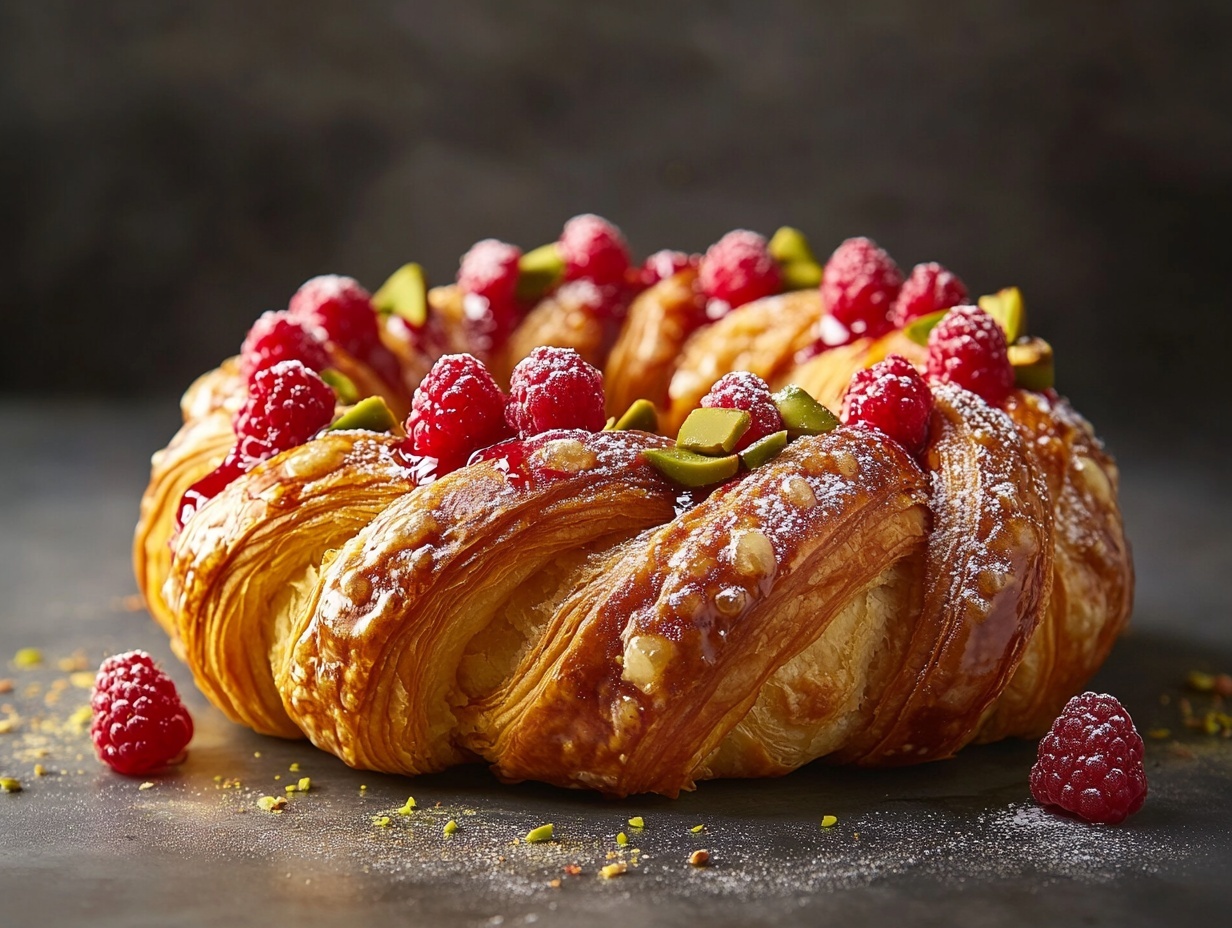
Laminate the dough over two days using three double folds. Roll to 4mm and cut rings using 14cm and 5cm cutters. Proof at 24°C for 2 hours, brush with egg wash and scatter black sesame seeds, then bake at 190°C (fan) for 18–20 minutes. Cool completely. Make the black sesame praline cream by combining a standard pastry cream base with sesame and praline pastes, then folding in whipped cream once cold. Apply charcoal glaze at 35°C. Split rings, pipe cream generously, replace tops, and finish with silver dust.


The Laminated Luxury Series

No. 3 — Saffron & Honey Kouign-Amann  |  You are reading No. 4 — Black Sesame Paris-Brest
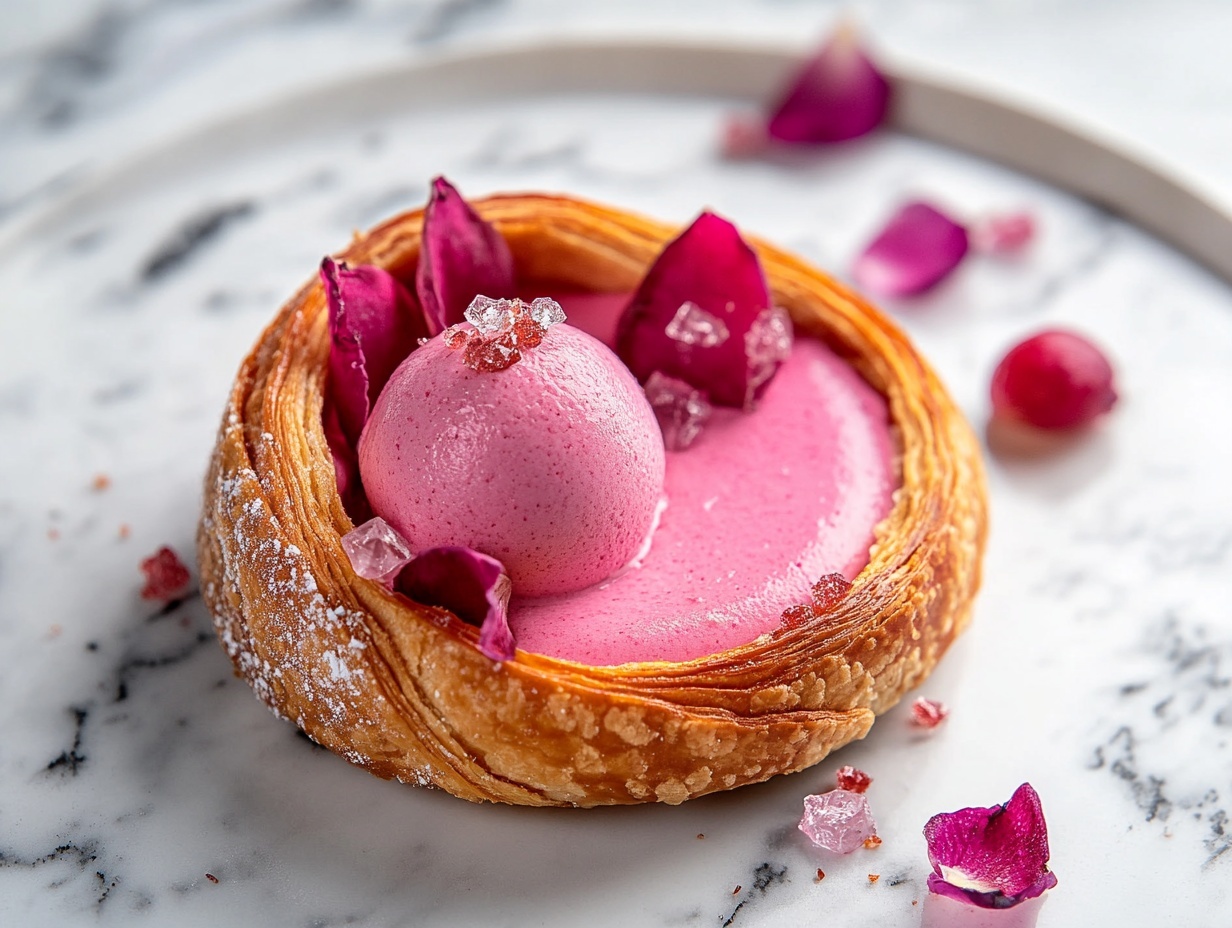
Next: No. 5 — Rose & Lychee Croissant Tart →


🖤 Want All 8 Recipes in One Place?

The complete Laminated Luxury Series — all 8 Michelin-level croissant recipes, technique notes, plating guides, and photography direction — is available as a premium recipe collection in our shop.

Browse the Shop →

Posted on

Liquorice & Carrot — Michelin Star Plated Dessert Recipe

★ Michelin Star Series ★

Liquorice & Carrot

Pastry Cream Espuma  ·  Carrot Cake  ·  Liquorice Ice Cream  ·  Carrot Sauce

An unexpected pairing of earthy liquorice and sweet carrot — a plated dessert of extraordinary depth and elegance that challenges everything you think you know about both ingredients.

⏱ Prep: 2 hours  ·  ⏲ Freeze: overnight  ·  🍲 Serves: 6  ·  ⭐ Difficulty: Advanced

Liquorice and Carrot Michelin Dessert Plate

The Story of This Plate

Liquorice and carrot is one of the great underexplored pairings in modern patisserie. Both carry an anise-adjacent earthiness, both have a natural sweetness that intensifies with heat, and together they create a dialogue on the plate that is simultaneously grounded and surprising.

The base is a tender, spiced carrot cake — moist, deep, and fragrant. Alongside it sits a quenelle of intensely flavoured liquorice ice cream, its cold creaminess cutting through the warmth of the plate. A swoosh of vibrant carrot sauce brings acidity and colour. The liquorice pastry cream espuma — aerated to a cloud-like lightness — is spooned tableside. And a single baton of glazed carrot provides the garnish: elegant, simple, precise.

This is fine dining at its most considered. Every element earns its place.


Ingredients

01 — Carrot Cake

200g plain flour
1½ tsp baking powder
½ tsp bicarbonate of soda
1½ tsp ground cinnamon
½ tsp ground ginger
¼ tsp ground nutmeg
Pinch of fine sea salt

180g light brown sugar
3 large eggs
180ml sunflower oil
1 tsp vanilla extract
250g finely grated carrot
60g toasted walnuts, chopped
Zest of 1 orange

02 — Liquorice Ice Cream

500ml whole milk
200ml double cream
6 egg yolks
140g caster sugar

30g pure liquorice paste
1 tsp black treacle
Pinch of sea salt
1 tsp anise extract (optional)

03 — Liquorice Pastry Cream Espuma

400ml whole milk
4 egg yolks
80g caster sugar
30g cornflour

25g liquorice paste
1 tsp vanilla extract
200ml double cream (lightly whipped)
2 gelatine leaves

Requires a cream whipper / iSi siphon with 2 N₂O charges

04 — Carrot Sauce

400ml fresh carrot juice
50g unsalted butter
1 tbsp honey
1 tsp fresh ginger, grated
Juice of ½ lemon
Pinch of salt

05 — Glazed Carrot Garnish

3 medium Chantenay carrots, peeled & halved lengthways
30g unsalted butter
1 tbsp honey
1 tbsp orange juice
Flaky sea salt & micro cress to finish

The Method

Step 01 — Liquorice Ice Cream (night before)

Warm milk and cream. Whisk in liquorice paste and treacle. Whisk yolks and sugar until pale, temper in hot cream. Cook to 82°C. Strain, cool over ice, churn and freeze overnight. Temper 5 minutes before serving.

Step 02 — Carrot Cake

Preheat oven to 170°C. Sift dry ingredients. Whisk sugar, eggs, oil and vanilla. Fold in dry mix, then carrot, walnuts and orange zest. Bake in a 20cm tin 30–35 mins. Cool, then cut into 6 neat 5cm cylinders with a ring cutter.

Step 03 — Liquorice Pastry Cream Espuma

Make a pastry cream with the milk, yolks, sugar and cornflour. Off heat, stir in liquorice paste, vanilla and soaked gelatine. Cool to 40°C, fold in whipped cream. Sieve into a cold iSi siphon, charge with 2 N₂O cartridges, refrigerate 2 hours minimum.

Step 04 — Carrot Sauce

Reduce carrot juice by half. Whisk in butter to emulsify. Add honey, ginger and lemon juice. Season and pass through a fine sieve. Keep warm.

Step 05 — Glazed Carrot Garnish

Melt butter with honey and orange juice. Add carrots cut-side down and cook 8–10 minutes until tender and lacquered. Season with flaky salt. Keep warm.

Step 06 — Plating (Michelin Standard)

Warm the plates. Place a carrot cake cylinder slightly left of centre. Sweep a bold arc of carrot sauce across the plate. Rest a quenelle of liquorice ice cream against the cake. Place one glazed carrot baton diagonally on top. Dispense espuma tableside in a generous cloud. Finish with micro cress and a flaky sea salt crystal on the ice cream.

Chef’s Secrets

Liquorice Quality

Use pure liquorice paste — not candy or syrup. Pontefract cake dissolved in warm cream, or Amarelli extract, gives the cleanest flavour.

Espuma Temperature

The siphon must be ice cold before charging. A warm siphon collapses the foam. Charge at least 2 hours ahead and dispense straight from the fridge.

Carrot Sauce Colour

Fresh-pressed carrot juice gives a luminous orange sauce. Reduce quickly over high heat to preserve its vivid colour and sweetness.

Plate Temperature

Warm plates to 40°C before service — warm to the touch but gentle enough not to melt the ice cream instantly.

Sommelier’s Note

Pairing Suggestion

A Pedro Ximénez sherry is extraordinary alongside this plate — its notes of dried fig, molasses and anise mirror the liquorice perfectly. Alternatively, a late harvest Riesling will lift the entire plate with gentle acidity.

Disclosure: This post may contain affiliate links. All Cookings earns a small commission at no extra cost to you.

Posted on 1 Comment

Île Flottante Recipe — Poached Meringue with Praline & Crème Anglaise

★ Michelin Star Series ★

Île Flottante with Praline & Crème Anglaise

Spun Caramel  ·  Toasted Almond Praline  ·  Silky Vanilla Crème Anglaise

Billowing poached meringue islands floating on a sea of silky vanilla crème anglaise — one of the most elegant and technically demanding desserts in the French classical repertoire.

⏱ Prep: 45 mins  ·  ⏲ Chill: 1 hour  ·  ☁️ Serves: 6  ·  ⭐ Difficulty: Advanced

Ile Flottante with Praline and Creme Anglaise
Île Flottante — billowing meringue islands, silky crème anglaise, spun caramel and toasted almond praline.

The Most Elegant Dessert in French Cuisine

Île flottante — floating island — is one of the crown jewels of French patisserie. Gossamer-light meringue, poached to cloud-like perfection, set adrift on a pool of the most silky vanilla crème anglaise imaginable. Finished with shards of spun caramel and a scattering of toasted almond praline, this is a dessert of theatrical elegance and extraordinary lightness.

You will find this on the menus of the finest brasseries in Paris and on the tasting menus of Michelin-starred kitchens. The technique is precise but learnable — and the result is unlike anything else in the dessert repertoire.

This is the full professional recipe — the kind served in starred kitchens — complete with exact timings, temperatures, and the plating technique used by trained pastry chefs.

What You Will Learn

✔️ How to make the perfect Italian meringue base
✔️ The exact poaching technique for cloud-like meringue islands
✔️ How to make a silky crème anglaise without scrambling the eggs
✔️ Toasted almond praline from scratch
✔️ The art of spun caramel (cage & threads)
✔️ Michelin-standard plating technique
✔️ Chef’s secrets for achieving the perfect wobble

Ingredients

The Meringue

4 large egg whites
150g caster sugar
1 tsp white wine vinegar
Pinch of fine salt

Crème Anglaise

600ml whole milk
6 large egg yolks
120g caster sugar
1 vanilla pod

Almond Praline

100g blanched almonds
150g caster sugar
50ml water
Pinch of sea salt

Spun Caramel

200g caster sugar
100ml water

Method

01 — Almond Praline

Toast the almonds in a dry pan over medium heat until golden and fragrant. In a separate saucepan, dissolve the sugar in the water and cook without stirring to a deep amber caramel (175°C). Remove from the heat, add the almonds and a pinch of sea salt, and stir to coat. Pour immediately onto a sheet of lightly oiled parchment. Leave to cool completely, then crush with a rolling pin to a coarse, irregular rubble.

02 — Crème Anglaise

Split the vanilla pod and scrape the seeds into the milk. Heat the milk over medium heat until it just reaches a simmer. Whisk the egg yolks with the caster sugar until pale and slightly thickened. Pour the hot milk onto the yolk mixture in a slow, steady stream, whisking constantly. Return to the pan over medium-low heat. Stir continuously with a wooden spoon, reaching into the corners of the pan, until the sauce thickens and coats the back of the spoon (82°C). Do not allow it to boil. Strain immediately into a cold bowl. Chill until needed.

03 — Poached Meringue Islands

Bring a wide, deep pan of water to a gentle, barely-there simmer. Whisk the egg whites with a pinch of salt to soft peaks. Add the caster sugar in a slow, steady stream, whisking continuously to a stiff, glossy meringue. Add the white wine vinegar and whisk for a further 10 seconds. Using two large spoons, shape oval quenelles of meringue and lower gently onto the simmering water. Poach for 2–3 minutes on each side. Remove carefully with a slotted spoon onto a clean kitchen towel to drain. Refrigerate until plating.

04 — Spun Caramel

Dissolve the sugar in the water in a clean, dry saucepan. Cook without stirring to a pale amber caramel (165°C). Remove from the heat and allow to cool for 1–2 minutes until it thickens slightly and begins to thread when lifted with a fork. Working quickly over two lightly oiled rolling pins (or the back of an oiled bowl), dip a fork into the caramel and wave it rapidly back and forth to create long golden threads. Gather into a nest and use immediately.

05 — Plating

Chill your serving bowls for at least 10 minutes. Pour a generous pool of cold crème anglaise into each bowl. Float a poached meringue island in the centre. Scatter almond praline around the base of the meringue and directly onto the anglaise. Crown the meringue with a small nest of spun caramel threads. Serve immediately — the caramel will soften within minutes.

Chef’s Note — The Anglaise Temperature

82°C is the sweet spot. Below it the sauce is too thin; above it the yolks begin to scramble. Use a digital thermometer and pull the pan from the heat a degree or two before it arrives — residual heat does the rest.

Chef’s Note — Meringue Water Temperature

The water must never actually boil. A rolling boil will batter the meringue and cause it to break apart. Keep it at the gentlest simmer — a few lazy bubbles rising to the surface is exactly right.

Chef’s Note — Caramel Timing

Spin the caramel at the very last moment, directly before service. Even a few minutes at room temperature will cause the threads to absorb moisture from the air and collapse. Practice the spinning motion before the caramel is ready.

⭐ Michelin Star Series

Also in the Series

Valrhona Chocolate Délice · Liquorice & Carrot Composed Plate · More coming soon

All Recipes →

Disclosure: This post may contain affiliate links. All Cookings earns a small commission at no extra cost to you.

Posted on

Charlotte Royale Recipe — Raspberry & Rose Dome Dessert

★ 5-Star Dessert Series ★

Rose & Raspberry Charlotte Royale

A breathtaking swirled dome of Swiss roll and raspberry mousse — the most showstopping dessert you will ever unmould.

⏱ Prep: 2 hours  ·  ⏲ Set: Overnight  ·  🌹 Serves: 10  ·  ⭐ Difficulty: Advanced

The Most Showstopping Dessert You Will Ever Make

When you unmould a Charlotte Royale at the table, conversations stop. The moment the bowl is lifted and that swirling dome of pink and cream is revealed — perfectly geometric, impossibly beautiful — is one of the most dramatic in all of patisserie. This is a dessert that looks like it came from a three-Michelin-star kitchen. With care and patience, you can make it at home.

The technique: a tightly lined dome of raspberry Swiss roll slices encases a cloud-light rose and raspberry mousse. Chilled overnight, unmoulded and garnished, it is simply magnificent.


Ingredients

Swiss Roll

4 large eggs
120g caster sugar
120g plain flour, sifted
1 tsp vanilla extract
200g raspberry jam, warmed
Pink food colouring (optional)

Rose & Raspberry Mousse

400g fresh raspberries
100g caster sugar
2 tbsp rosewater
6 gelatine leaves
500ml double cream
3 egg whites
50g icing sugar

To Garnish

Fresh raspberries
Dried rose petals
Edible gold leaf
Icing sugar for dusting
Micro herbs

The Method

Step 1 — The Swiss Roll. Whisk eggs and sugar until tripled in volume and ribbon-stage — about 8 minutes. Fold in sifted flour with a metal spoon. Spread onto a lined 30x40cm baking tray. Bake at 200°C for 8–10 minutes until just set.

Step 2. Turn out onto a sugar-dusted sheet of baking paper while hot. Spread with warm raspberry jam. Roll tightly. Wrap in cling film and refrigerate 30 minutes until firm.

Step 3. Slice roll into 1cm rounds. Line a 1.5-litre pudding bowl with cling film. Arrange slices tightly, spiral-side facing the bowl, to completely line the interior with no gaps.

Step 4 — The Mousse. Blitz raspberries with sugar. Pass through a fine sieve. Soak gelatine in cold water for 5 minutes, squeeze out, dissolve in 3 tbsp warm raspberry purée. Stir into remaining purée with rosewater. Cool until just beginning to set.

Step 5. Whip cream to soft peaks. Whisk egg whites with icing sugar to stiff peaks. Fold cream into raspberry mixture, then fold in egg whites in two additions.

Step 6. Pour mousse into lined bowl. Cover with remaining Swiss roll slices. Press gently. Cover with cling film and refrigerate overnight.

Step 7 — The Unmould. Place a flat serving plate on top of the bowl. Invert confidently. Lift the bowl. Peel away cling film to reveal the stunning spiral dome. Garnish with fresh raspberries, dried rose petals, gold leaf and a dusting of icing sugar.

Chef’s Secrets

01 — The Lining

The Swiss roll lining is everything. No gaps, no cracks. Work methodically from the base upwards, pressing each slice firmly against the bowl. The pattern will be revealed on unmoulding.

02 — The Gelatine

Do not add gelatine to the mousse too early or too late. It must be just beginning to set — at this stage it will hold the mousse without creating lumps.

03 — The Unmould

Confidence is everything. Place the plate, invert swiftly and lift in one clean motion. Do not hesitate. The cling film means it will always release cleanly.

Disclosure: This post may contain affiliate links. All Cookings earns a small commission at no extra cost to you.

Posted on 1 Comment

Lemon Tart Recipe with Italian Meringue — French Patisserie at Home

★ 5-Star Dessert Series ★

Lemon Tart with Italian Meringue

Intensely sharp lemon curd in a buttery pastry shell, crowned with billowing torched Italian meringue.

⏱ Prep: 1 hour  ·  ⏲ Chill: 3 hours  ·  🍋 Serves: 8  ·  ⭐ Difficulty: Advanced

The Perfect Balance of Sharp and Sweet

The great lemon tart is a study in contrasts. The filling must be bracingly sharp — not timid, not sweet, but properly mouth-puckering with the brightness of fresh lemons. The pastry must be impossibly buttery and short. And the Italian meringue, piped in dramatic peaks and kissed with a blowtorch, must be silky, glossy and sweet enough to balance the acidity below.

This is the version that wins awards. Sharp, beautiful and technically impeccable.


Ingredients

Pâte Sucrée

200g plain flour
100g unsalted butter, cold
80g icing sugar
2 egg yolks
1 tsp vanilla extract
Pinch of sea salt

Lemon Curd Filling

Zest of 4 unwaxed lemons
250ml fresh lemon juice
200g caster sugar
4 large eggs + 2 yolks
150g unsalted butter, cubed
1 tbsp cornflour

Italian Meringue

4 egg whites
240g caster sugar
80ml water
Pinch of cream of tartar

The Method

Step 1. Make pâte sucrée: pulse flour, sugar and salt. Add cold butter, pulse to breadcrumbs. Add yolks and vanilla, pulse until dough just comes together. Wrap and refrigerate 1 hour.

Step 2. Roll to 3mm. Line a 23cm tart tin. Blind bake at 180°C for 15 minutes with baking beans. Remove beans, egg wash, bake 8 more minutes until golden. Cool.

Step 3. For the filling: whisk lemon juice, zest, sugar, eggs, yolks and cornflour in a heavy pan. Cook over medium heat, stirring constantly, until thick and bubbling — about 8 minutes.

Step 4. Remove from heat. Whisk in cold butter cubes one at a time until glossy. Pass through a fine sieve. Pour into tart shell. Refrigerate minimum 3 hours until perfectly set.

Step 5 — Italian Meringue. Heat sugar and water to exactly 121°C (soft ball stage). Meanwhile, whisk egg whites with cream of tartar to soft peaks. With mixer running, pour hot syrup down the side of the bowl in a thin stream. Whisk on high until thick, glossy and completely cool — about 8 minutes.

Step 6. Transfer meringue to a piping bag fitted with a Saint-Honoré or large star nozzle. Pipe in dramatic peaks across the tart surface.

Step 7 — The Torch. Using a kitchen blowtorch, toast the meringue peaks to deep golden brown. Work quickly in sweeping motions. Garnish with lemon zest curls and micro herbs. Serve immediately.

Chef’s Secrets

01 — The Acidity

Do not be afraid of sharpness. The lemon curd should make you wince slightly. The Italian meringue provides the sweetness that makes the contrast sing.

02 — The Syrup Temperature

Italian meringue must reach exactly 121°C. This pasteurises the egg whites and creates a stable meringue that holds perfectly for hours.

03 — The Sieve

Always pass the lemon curd through a fine sieve. This removes any cooked egg and creates that impossibly smooth, glossy surface that defines a great tart.

Disclosure: This post may contain affiliate links. All Cookings earns a small commission at no extra cost to you.

Posted on

Chocolate Fondant Recipe with Molten Centre & Vanilla Bean Ice Cream

★ 5-Star Dessert Series ★

Dark Chocolate Fondant with Vanilla Bean Ice Cream

A perfectly set exterior giving way to a river of molten dark chocolate — the most dramatic dessert in fine dining.

⏱ Prep: 20 mins  ·  ⏲ Chill: 1 hour  ·  🍫 Serves: 6  ·  ⭐ Difficulty: Intermediate

The Most Dramatic Dessert in Fine Dining

Few desserts command the same reverence as the chocolate fondant. The moment you break through that perfectly set shell and a dark river of molten chocolate flows out onto the plate — that is one of the great moments in gastronomy. This is the recipe that gets it right every single time: intense, dark, glossy and devastatingly good alongside a quenelle of cold vanilla bean ice cream.

The secret is resting time and oven precision. Master those two things and this dessert will never fail you.


Ingredients

The Fondant

200g Valrhona 70% dark chocolate
200g unsalted butter
4 large eggs
4 egg yolks
200g caster sugar
80g plain flour, sifted
Cocoa powder for dusting

Vanilla Bean Ice Cream

500ml double cream
250ml whole milk
2 vanilla pods, split
6 egg yolks
150g caster sugar
Pinch of flaky sea salt

To Serve

Cocoa powder for dusting
Flaky sea salt
Fresh raspberries
Micro mint leaves
Edible gold leaf

The Method

Step 1 — Ice Cream First. Heat cream, milk and vanilla pods to a simmer. Whisk yolks and sugar until pale. Temper hot cream into yolks, return to pan, stir over low heat until it coats a spoon (82°C). Strain, cool over ice, churn in ice cream machine. Freeze.

Step 2. Butter 6 individual dariole moulds or ramekins generously. Dust with cocoa powder, tapping out excess. Refrigerate.

Step 3. Melt chocolate and butter together in a bowl over barely simmering water. Stir until completely smooth and glossy. Cool to 35°C.

Step 4. Whisk eggs, yolks and sugar together until thick, pale and doubled in volume — about 5 minutes. This creates the structure.

Step 5. Fold chocolate mixture into egg mixture. Sift over flour and fold gently until just combined — do not overmix.

Step 6. Divide batter evenly between prepared moulds. Refrigerate for a minimum of 1 hour, up to 24 hours. This is the key to a consistent molten centre.

Step 7. Preheat oven to 200°C. Bake fondants straight from the fridge for exactly 12 minutes. The sides will be set, the centre will wobble.

Step 8 — The Reveal. Rest 1 minute. Run a knife around the edge. Turn out onto a warm plate. Dust with cocoa. Add a quenelle of ice cream, three raspberries, a pinch of Maldon and a whisper of gold leaf.

Chef’s Secrets

01 — The Cold Rest

Chilling the batter is non-negotiable. It firms the exterior and ensures the centre stays molten during baking. Never bake from room temperature.

02 — Oven Precision

Every oven is different. Test one fondant first. 12 minutes is a guide — you may need 11 or 13. The sides must be fully set before turning out.

03 — The Chocolate

Use the best dark chocolate you can find. Valrhona 70% is the professional standard. The quality of your chocolate is the quality of your fondant.

Disclosure: This post may contain affiliate links. All Cookings earns a small commission at no extra cost to you.

Posted on

Strawberry Millefeuille Recipe with Vanilla Crème Pâtissière

★ 5-Star Dessert Series ★

Strawberry Millefeuille with Vanilla Crème Pâtissière

Shattering layers of caramelised puff pastry, cloud-soft vanilla cream and the finest summer strawberries.

⏱ Prep: 1 hour  ·  ⏲ Chill: 2 hours  ·  🍓 Serves: 6  ·  ⭐ Difficulty: Advanced

The Art of the Millefeuille

The millefeuille — meaning a thousand leaves — is one of the most celebrated desserts in French patisserie. Three precise layers of caramelised, shatteringly crisp puff pastry are sandwiched with silky vanilla crème pâtissière and crowned with perfectly ripe strawberries. Every element must be made with care. Every layer must be even. The result is nothing short of extraordinary.

This recipe is the version served in the great Parisian patisseries — precise, elegant, and utterly unforgettable.


Ingredients

Puff Pastry

500g all-butter puff pastry
80g icing sugar
Pinch of fine sea salt

Crème Pâtissière

500ml whole milk
1 vanilla pod, split
6 egg yolks
120g caster sugar
40g cornflour
50g unsalted butter
200ml double cream, whipped

Strawberries & Finish

500g fresh strawberries
2 tbsp strawberry jam, warmed
Icing sugar for dusting
Fresh mint leaves
Edible gold leaf (optional)

The Method

Step 1. Preheat oven to 200°C. Roll puff pastry to 3mm thickness. Cut into three equal rectangles approximately 10x30cm. Place on lined baking trays, prick all over with a fork and refrigerate 30 minutes.

Step 2. Dust pastry generously with icing sugar. Bake 18–22 minutes until deeply golden and caramelised. The sugar will form a glass-like crust. Cool completely on a wire rack.

Step 3. For the crème pâtissière: heat milk with vanilla pod and seeds to just below a simmer. Whisk egg yolks, sugar and cornflour together until pale. Pour hot milk over egg mixture in a slow stream, whisking constantly.

Step 4. Return to pan. Cook over medium heat, stirring constantly, until thick and bubbling — about 3 minutes. Remove from heat, beat in cold butter. Press cling film directly onto surface. Chill completely.

Step 5. Whip double cream to soft peaks. Fold gently into chilled crème pâtissière to create a light, airy diplomat cream. Transfer to a piping bag fitted with a large round nozzle.

Step 6. Hull and halve strawberries. Brush with warm jam to glaze.

Step 7. Place first pastry layer on serving board. Pipe diplomat cream in neat rows. Arrange strawberries. Repeat with second layer.

Step 8 — The Finish. Place final pastry layer on top. Dust with icing sugar. Garnish with whole strawberries, mint and gold leaf. Slice immediately with a hot serrated knife for clean cuts.

Chef’s Secrets

01 — The Caramel Crust

Dust pastry with icing sugar twice during baking for maximum caramelisation. The result is a glass-like crust that shatters beautifully on the fork.

02 — The Cream

The crème pâtissière must be completely cold before folding in the whipped cream. Warm custard will deflate the cream and ruin the texture.

03 — Assembly Timing

Assemble no more than 2 hours before serving. The pastry will soften if left too long — you want that shatter when you cut through.

Disclosure: This post may contain affiliate links. All Cookings earns a small commission at no extra cost to you.