Posted on

How Sugar Actually Works: The Michelin Pastry Chef’s Guide to Sugar Stages

Every pastry student learns about sugar. Sweetness, caramelisation, syrup stages — these are foundational. What is rarely taught is that in professional kitchens, sugar is not used primarily for sweetness. It is used for texture, for colour, for moisture control, and for structural architecture. Sweetness is almost secondary.

Understanding how sugar behaves at different stages of cooking, and why Michelin pastry chefs use it the way they do, will change how you approach every dessert you make. Not because you will necessarily change your recipes, but because you will understand what you are doing rather than simply following instructions.

The Sugar Stages and What Each One Actually Does

Sugar dissolved in water and heated passes through identifiable physical stages, each with specific applications in pastry. The temperature references below assume you are working at sea level. Dubai and other high-altitude cities require small adjustments (subtract approximately 1°C per 300m of elevation).

Thread Stage: 106–113°C

Hot sugar syrup being poured into a stand mixer whipping egg whites into stiff peaks
Thread and soft-ball stage syrup poured into whipping egg whites — the base of Italian meringue.

At this temperature, sugar syrup dropped into cold water forms thin threads. In professional kitchens this stage is used for moistening baba, dipping fruits, and making spun sugar. It is also the stage used for Italian meringue preparation — the syrup is poured into whipping egg whites at exactly 121°C to pasteurise the eggs and create a stable, shiny meringue that holds structure without collapsing or weeping. Temperature precision at this stage is critical. Under 118°C and the meringue will weep. Over 124°C and the syrup will seize on contact with the whites.

Soft Ball: 113–118°C

Used for fudge, fondant and buttercream. The sugar retains moisture and produces a pliable, yielding texture when set. Fondant — the smooth, white confection used to glaze éclairs and mille-feuille — is made by cooking syrup to 116°C, cooling it to around 40°C, then agitating it vigorously until it crystallises into an opaque, smooth paste. The agitation is essential: it produces millions of microscopic crystals that give fondant its smooth melt on the palate. Large crystals produce a grainy texture — the sign of poor fondant technique.

Firm Ball: 118–121°C

The range for Italian meringue and most French buttercreams. At this temperature, the sugar solution is concentrated enough to pasteurise egg whites on contact, but fluid enough to incorporate smoothly without seizing. This is the stage professional pastry chefs return to most frequently — the same principle carries over to pâte à bombe, where hot syrup is poured into whipping egg yolks instead of whites, cooking them safely while building the aerated structure behind desserts like our Tropical Mango Coconut Tiramisu, and its plant-based counterpart, our Vegan Tiramisu, which uses the same technique with whipped aquafaba in place of egg yolks.

Hard Crack: 149–154°C

Pulled sugar at hard-crack stage stretched into fine golden threads by hand
Hard-crack sugar stretched into pulled sugar threads — the window to shape it is roughly 90 seconds.

Used for pulled sugar, blown sugar, nougatine and praline. At this temperature most of the water has evaporated and the sugar is almost entirely sucrose. It sets rigid and glassy on cooling. Nougatine — the caramelised almond brittle that forms the base of many plated desserts — is made at hard crack, combined with toasted nuts, then rolled thin and cut before it sets. The window between workable and brittle is roughly 90 seconds, which is why professional kitchens keep it under heat lamps during shaping.

Caramel: 160–180°C

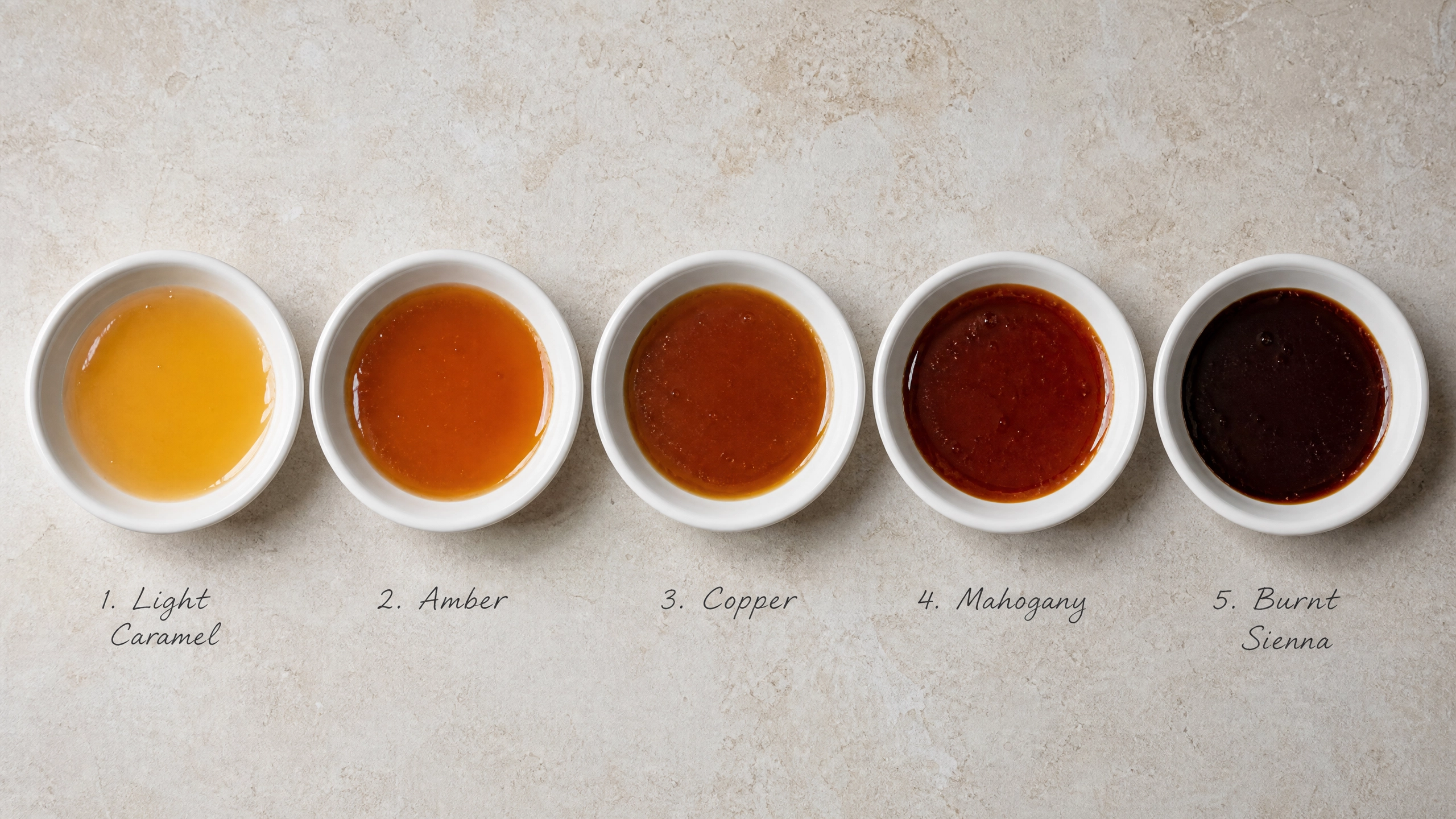
This is where sucrose breaks down entirely and the Maillard reaction and pyrolysis produce hundreds of new flavour compounds. The colour shifts from amber to deep copper to mahogany. The flavour shifts from butterscotch to bitter toffee to burnt. Professional pastry chefs typically use caramel at 170–175°C for sauces and glazes — complex, slightly bitter, with depth. Lighter caramel (160°C) is sweet and one-dimensional. Dark caramel (above 180°C) is acrid and irreversible. The difference between them is often less than 10 seconds on the heat — see our Salted Caramel Chocolate Délice for this exact stage in practice.

Five bowls of caramel at increasing stages of colour, labeled Light Caramel, Amber, Copper, Mahogany, and Burnt Sienna
The colour shift from light caramel to burnt sienna happens fast — often less than 10 seconds apart on the heat.

How Professional Pastry Chefs Actually Use These Stages

Sugar as Moisture Control

Sugar is hygroscopic — it attracts and retains moisture from its environment. This is why a cake or biscuit with higher sugar content stays moist longer than a lower-sugar one. Inverted sugar (glucose + fructose, made by hydrolysing sucrose) is even more hygroscopic than caster sugar, which is why professional ganaches and ice cream bases use trimoline or glucose syrup — it keeps textures soft and prevents crystallisation in frozen products.

Sugar as Structure

In a baked cake, sugar delays gluten network formation and protein coagulation by competing with them for water. This is why high-sugar cakes are tenderer than low-sugar ones — less gluten develops during mixing. The same principle explains why adding sugar to a meringue stabilises it: sugar raises the temperature at which the egg white proteins coagulate, giving you more time to build the foam before it sets. Remove sugar from a meringue and it collapses almost immediately when heated.

Sugar as Colour

Reducing sugars (glucose, fructose, lactose) participate in the Maillard reaction when heated with amino acids from proteins. This is what produces the golden colour on a baked croissant, the dark crust on a brioche, the caramelised surface of a crème brûlée. Professional egg washes include milk (lactose) precisely because the additional reducing sugar accelerates browning. A pure egg wash browns more slowly and less deeply than one extended with milk or cream.

The Professional Discipline: Temperature, Not Guesswork

Digital probe thermometer reading 121°C in a copper pan of boiling sugar syrup
Firm-ball stage at 121°C — the range for Italian meringue, confirmed by thermometer, not guesswork.

In a professional kitchen, sugar work is never done by eye alone. A probe thermometer is essential equipment, not optional. Home baking guides often suggest the “cold water test” as a substitute for a thermometer — dropping syrup into cold water and feeling the texture. It works in principle but introduces variables: the temperature of the water, the speed of your hands, the air temperature. A thermometer removes all of those variables.

If you bake seriously, a digital probe thermometer is the single piece of equipment that will improve your results more than any other purchase. Not a stand mixer. Not a silicone mat. A probe. Temperature is information. Without it, you are guessing.


Part of the Michelin Star Series on allcookings.com — the science and technique behind professional pastry, broken down for the serious home baker.
Posted on

Charlotte Royale Recipe — Raspberry & Rose Dome Dessert

★ 5-Star Dessert Series ★

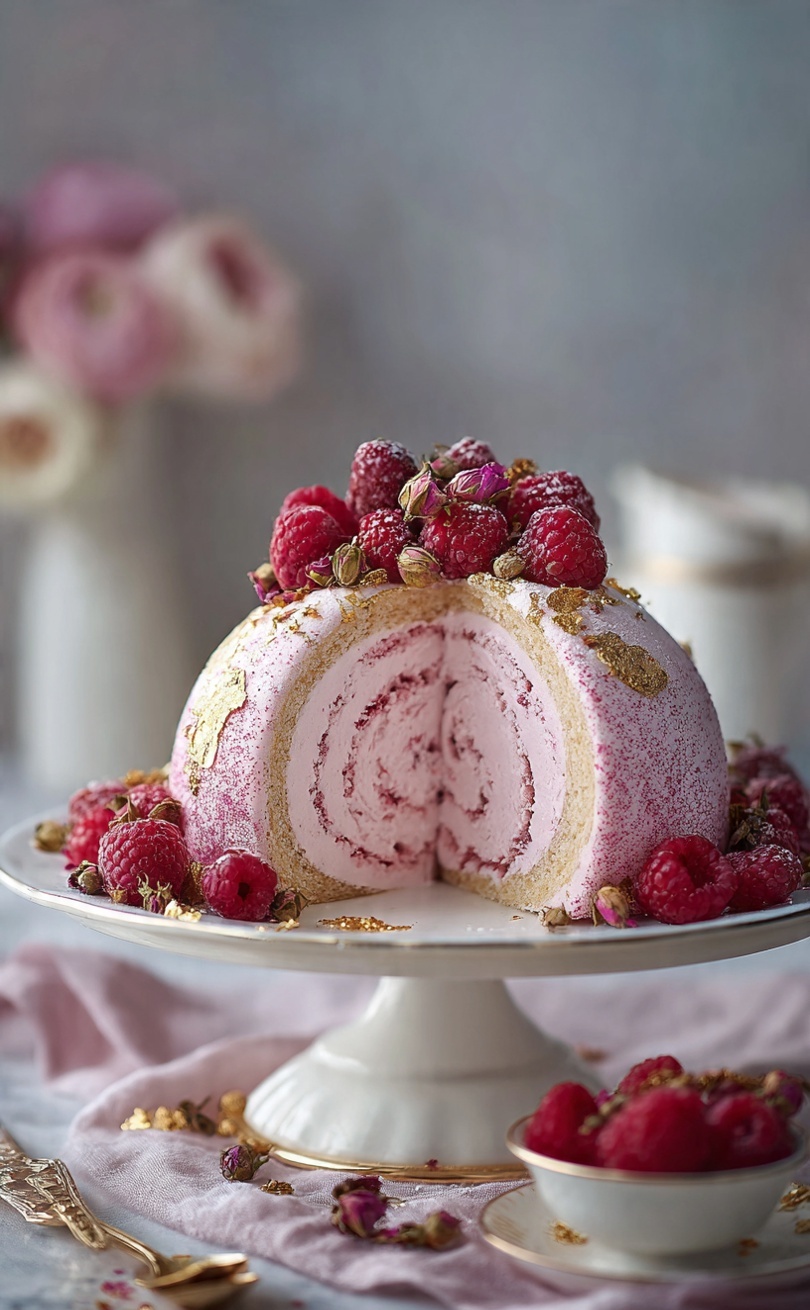
Rose & Raspberry Charlotte Royale

A breathtaking swirled dome of Swiss roll and raspberry mousse — the most showstopping dessert you will ever unmould.

⏱ Prep: 2 hours  ·  ⏲ Set: Overnight  ·  🌹 Serves: 10  ·  ⭐ Difficulty: Advanced

The Most Showstopping Dessert You Will Ever Make

When you unmould a Charlotte Royale at the table, conversations stop. The moment the bowl is lifted and that swirling dome of pink and cream is revealed — perfectly geometric, impossibly beautiful — is one of the most dramatic in all of patisserie. This is a dessert that looks like it came from a three-Michelin-star kitchen. With care and patience, you can make it at home.

The technique: a tightly lined dome of raspberry Swiss roll slices encases a cloud-light rose and raspberry mousse. Chilled overnight, unmoulded and garnished, it is simply magnificent.


Ingredients

Swiss Roll

4 large eggs
120g caster sugar
120g plain flour, sifted
1 tsp vanilla extract
200g raspberry jam, warmed
Pink food colouring (optional)

Rose & Raspberry Mousse

400g fresh raspberries
100g caster sugar
2 tbsp rosewater
6 gelatine leaves
500ml double cream
3 egg whites
50g icing sugar

To Garnish

Fresh raspberries
Dried rose petals
Edible gold leaf
Icing sugar for dusting
Micro herbs

The Method

Step 1 — The Swiss Roll. Whisk eggs and sugar until tripled in volume and ribbon-stage — about 8 minutes. Fold in sifted flour with a metal spoon. Spread onto a lined 30x40cm baking tray. Bake at 200°C for 8–10 minutes until just set.

Step 2. Turn out onto a sugar-dusted sheet of baking paper while hot. Spread with warm raspberry jam. Roll tightly. Wrap in cling film and refrigerate 30 minutes until firm.

Step 3. Slice roll into 1cm rounds. Line a 1.5-litre pudding bowl with cling film. Arrange slices tightly, spiral-side facing the bowl, to completely line the interior with no gaps.

Step 4 — The Mousse. Blitz raspberries with sugar. Pass through a fine sieve. Soak gelatine in cold water for 5 minutes, squeeze out, dissolve in 3 tbsp warm raspberry purée. Stir into remaining purée with rosewater. Cool until just beginning to set.

Step 5. Whip cream to soft peaks. Whisk egg whites with icing sugar to stiff peaks. Fold cream into raspberry mixture, then fold in egg whites in two additions.

Step 6. Pour mousse into lined bowl. Cover with remaining Swiss roll slices. Press gently. Cover with cling film and refrigerate overnight.

Step 7 — The Unmould. Place a flat serving plate on top of the bowl. Invert confidently. Lift the bowl. Peel away cling film to reveal the stunning spiral dome. Garnish with fresh raspberries, dried rose petals, gold leaf and a dusting of icing sugar.

Chef’s Secrets

01 — The Lining

The Swiss roll lining is everything. No gaps, no cracks. Work methodically from the base upwards, pressing each slice firmly against the bowl. The pattern will be revealed on unmoulding.

02 — The Gelatine

Do not add gelatine to the mousse too early or too late. It must be just beginning to set — at this stage it will hold the mousse without creating lumps.

03 — The Unmould

Confidence is everything. Place the plate, invert swiftly and lift in one clean motion. Do not hesitate. The cling film means it will always release cleanly.

Disclosure: This post may contain affiliate links. All Cookings earns a small commission at no extra cost to you.

Posted on 1 Comment

Lemon Tart Recipe with Italian Meringue — French Patisserie at Home

★ 5-Star Dessert Series ★

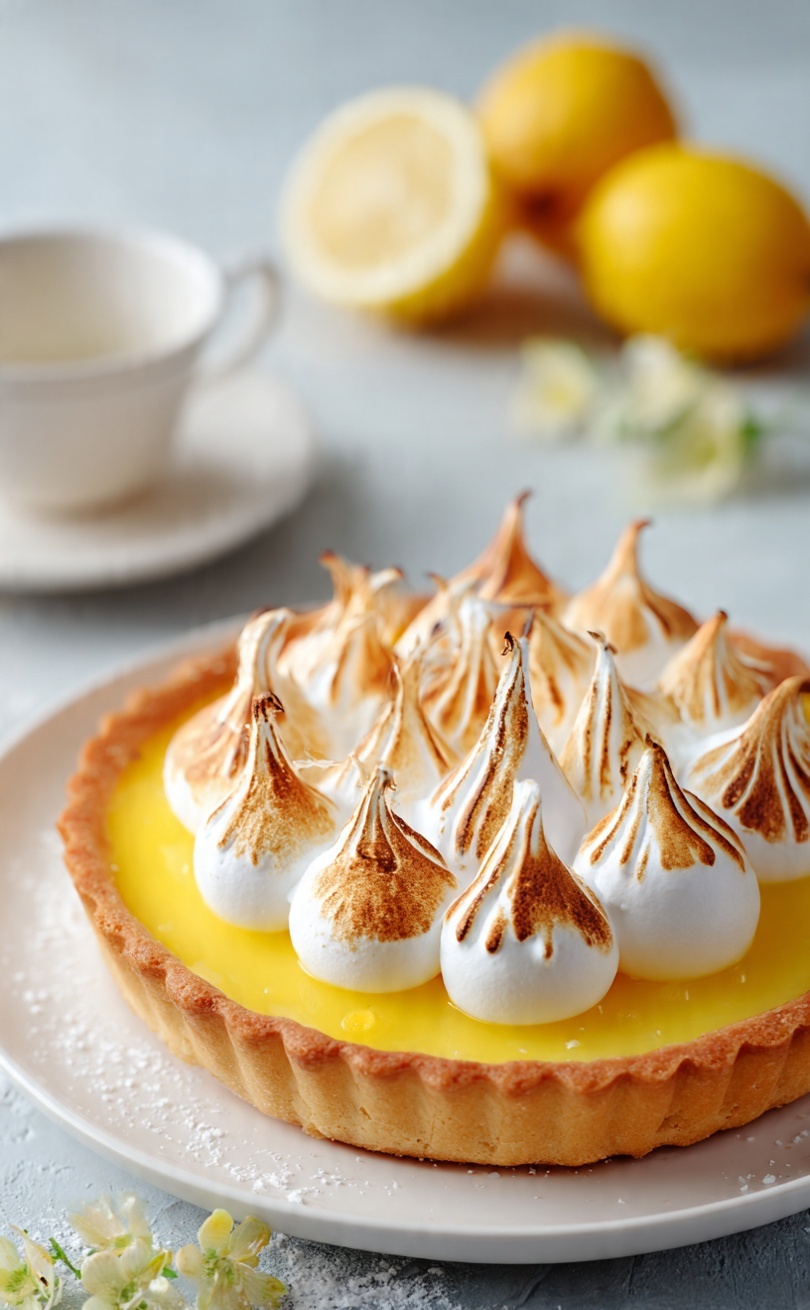
Lemon Tart with Italian Meringue

Intensely sharp lemon curd in a buttery pastry shell, crowned with billowing torched Italian meringue.

⏱ Prep: 1 hour  ·  ⏲ Chill: 3 hours  ·  🍋 Serves: 8  ·  ⭐ Difficulty: Advanced

The Perfect Balance of Sharp and Sweet

The great lemon tart is a study in contrasts. The filling must be bracingly sharp — not timid, not sweet, but properly mouth-puckering with the brightness of fresh lemons. The pastry must be impossibly buttery and short. And the Italian meringue, piped in dramatic peaks and kissed with a blowtorch, must be silky, glossy and sweet enough to balance the acidity below.

This is the version that wins awards. Sharp, beautiful and technically impeccable.


Ingredients

Pâte Sucrée

200g plain flour
100g unsalted butter, cold
80g icing sugar
2 egg yolks
1 tsp vanilla extract
Pinch of sea salt

Lemon Curd Filling

Zest of 4 unwaxed lemons
250ml fresh lemon juice
200g caster sugar
4 large eggs + 2 yolks
150g unsalted butter, cubed
1 tbsp cornflour

Italian Meringue

4 egg whites
240g caster sugar
80ml water
Pinch of cream of tartar

The Method

Step 1. Make pâte sucrée: pulse flour, sugar and salt. Add cold butter, pulse to breadcrumbs. Add yolks and vanilla, pulse until dough just comes together. Wrap and refrigerate 1 hour.

Step 2. Roll to 3mm. Line a 23cm tart tin. Blind bake at 180°C for 15 minutes with baking beans. Remove beans, egg wash, bake 8 more minutes until golden. Cool.

Step 3. For the filling: whisk lemon juice, zest, sugar, eggs, yolks and cornflour in a heavy pan. Cook over medium heat, stirring constantly, until thick and bubbling — about 8 minutes.

Step 4. Remove from heat. Whisk in cold butter cubes one at a time until glossy. Pass through a fine sieve. Pour into tart shell. Refrigerate minimum 3 hours until perfectly set.

Step 5 — Italian Meringue. Heat sugar and water to exactly 121°C (soft ball stage). Meanwhile, whisk egg whites with cream of tartar to soft peaks. With mixer running, pour hot syrup down the side of the bowl in a thin stream. Whisk on high until thick, glossy and completely cool — about 8 minutes.

Step 6. Transfer meringue to a piping bag fitted with a Saint-Honoré or large star nozzle. Pipe in dramatic peaks across the tart surface.

Step 7 — The Torch. Using a kitchen blowtorch, toast the meringue peaks to deep golden brown. Work quickly in sweeping motions. Garnish with lemon zest curls and micro herbs. Serve immediately.

Chef’s Secrets

01 — The Acidity

Do not be afraid of sharpness. The lemon curd should make you wince slightly. The Italian meringue provides the sweetness that makes the contrast sing.

02 — The Syrup Temperature

Italian meringue must reach exactly 121°C. This pasteurises the egg whites and creates a stable meringue that holds perfectly for hours.

03 — The Sieve

Always pass the lemon curd through a fine sieve. This removes any cooked egg and creates that impossibly smooth, glossy surface that defines a great tart.

Disclosure: This post may contain affiliate links. All Cookings earns a small commission at no extra cost to you.

Posted on

Chocolate Fondant Recipe with Molten Centre & Vanilla Bean Ice Cream

★ 5-Star Dessert Series ★

Dark Chocolate Fondant with Vanilla Bean Ice Cream

A perfectly set exterior giving way to a river of molten dark chocolate — the most dramatic dessert in fine dining.

⏱ Prep: 20 mins  ·  ⏲ Chill: 1 hour  ·  🍫 Serves: 6  ·  ⭐ Difficulty: Intermediate

The Most Dramatic Dessert in Fine Dining

Few desserts command the same reverence as the chocolate fondant. The moment you break through that perfectly set shell and a dark river of molten chocolate flows out onto the plate — that is one of the great moments in gastronomy. This is the recipe that gets it right every single time: intense, dark, glossy and devastatingly good alongside a quenelle of cold vanilla bean ice cream.

The secret is resting time and oven precision. Master those two things and this dessert will never fail you.


Ingredients

The Fondant

200g Valrhona 70% dark chocolate
200g unsalted butter
4 large eggs
4 egg yolks
200g caster sugar
80g plain flour, sifted
Cocoa powder for dusting

Vanilla Bean Ice Cream

500ml double cream
250ml whole milk
2 vanilla pods, split
6 egg yolks
150g caster sugar
Pinch of flaky sea salt

To Serve

Cocoa powder for dusting
Flaky sea salt
Fresh raspberries
Micro mint leaves
Edible gold leaf

The Method

Step 1 — Ice Cream First. Heat cream, milk and vanilla pods to a simmer. Whisk yolks and sugar until pale. Temper hot cream into yolks, return to pan, stir over low heat until it coats a spoon (82°C). Strain, cool over ice, churn in ice cream machine. Freeze.

Step 2. Butter 6 individual dariole moulds or ramekins generously. Dust with cocoa powder, tapping out excess. Refrigerate.

Step 3. Melt chocolate and butter together in a bowl over barely simmering water. Stir until completely smooth and glossy. Cool to 35°C.

Step 4. Whisk eggs, yolks and sugar together until thick, pale and doubled in volume — about 5 minutes. This creates the structure.

Step 5. Fold chocolate mixture into egg mixture. Sift over flour and fold gently until just combined — do not overmix.

Step 6. Divide batter evenly between prepared moulds. Refrigerate for a minimum of 1 hour, up to 24 hours. This is the key to a consistent molten centre.

Step 7. Preheat oven to 200°C. Bake fondants straight from the fridge for exactly 12 minutes. The sides will be set, the centre will wobble.

Step 8 — The Reveal. Rest 1 minute. Run a knife around the edge. Turn out onto a warm plate. Dust with cocoa. Add a quenelle of ice cream, three raspberries, a pinch of Maldon and a whisper of gold leaf.

Chef’s Secrets

01 — The Cold Rest

Chilling the batter is non-negotiable. It firms the exterior and ensures the centre stays molten during baking. Never bake from room temperature.

02 — Oven Precision

Every oven is different. Test one fondant first. 12 minutes is a guide — you may need 11 or 13. The sides must be fully set before turning out.

03 — The Chocolate

Use the best dark chocolate you can find. Valrhona 70% is the professional standard — the same chocolate behind our Valrhona Chocolate Délice. The quality of your chocolate is the quality of your fondant.

You Might Also Like

If you loved the drama of a molten centre, try our Valrhona Chocolate Délice with Gold Leaf — the silkiest set chocolate tart in fine dining, finished with edible gold and raspberry coulis.

Disclosure: This post may contain affiliate links. All Cookings earns a small commission at no extra cost to you.

Posted on

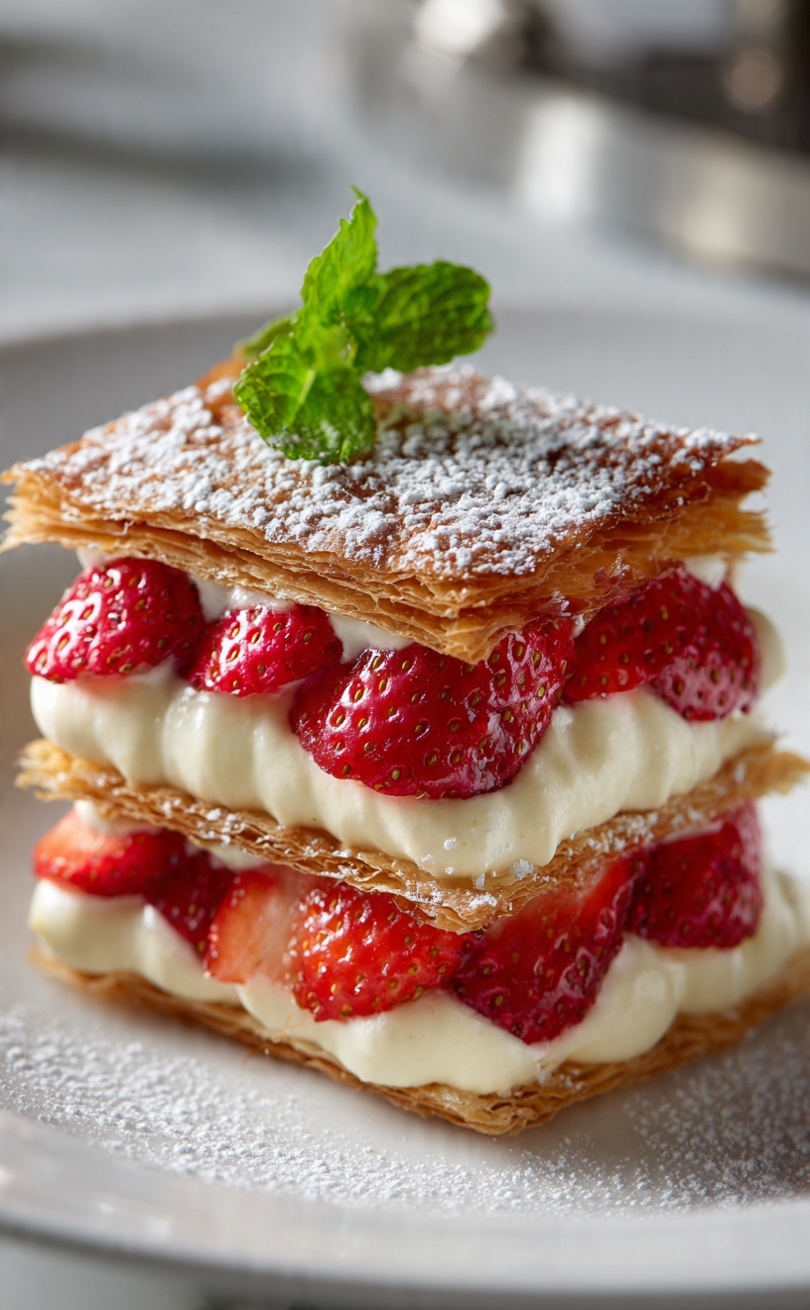
Strawberry Millefeuille Recipe with Vanilla Crème Pâtissière

★ 5-Star Dessert Series ★

Strawberry Millefeuille with Vanilla Crème Pâtissière

Shattering layers of caramelised puff pastry, cloud-soft vanilla cream and the finest summer strawberries.

⏱ Prep: 1 hour  ·  ⏲ Chill: 2 hours  ·  🍓 Serves: 6  ·  ⭐ Difficulty: Advanced

The Art of the Millefeuille

The millefeuille — meaning a thousand leaves — is one of the most celebrated desserts in French patisserie. Three precise layers of caramelised, shatteringly crisp puff pastry are sandwiched with silky vanilla crème pâtissière and crowned with perfectly ripe strawberries. Every element must be made with care. Every layer must be even. The result is nothing short of extraordinary.

This recipe is the version served in the great Parisian patisseries — precise, elegant, and utterly unforgettable.


Ingredients

Puff Pastry

500g all-butter puff pastry
80g icing sugar
Pinch of fine sea salt

Crème Pâtissière

500ml whole milk
1 vanilla pod, split
6 egg yolks
120g caster sugar
40g cornflour
50g unsalted butter
200ml double cream, whipped

Strawberries & Finish

500g fresh strawberries
2 tbsp strawberry jam, warmed
Icing sugar for dusting
Fresh mint leaves
Edible gold leaf (optional)

The Method

Step 1. Preheat oven to 200°C. Roll puff pastry to 3mm thickness. Cut into three equal rectangles approximately 10x30cm. Place on lined baking trays, prick all over with a fork and refrigerate 30 minutes.

Step 2. Dust pastry generously with icing sugar. Bake 18–22 minutes until deeply golden and caramelised. The sugar will form a glass-like crust. Cool completely on a wire rack.

Step 3. For the crème pâtissière: heat milk with vanilla pod and seeds to just below a simmer. Whisk egg yolks, sugar and cornflour together until pale. Pour hot milk over egg mixture in a slow stream, whisking constantly.

Step 4. Return to pan. Cook over medium heat, stirring constantly, until thick and bubbling — about 3 minutes. Remove from heat, beat in cold butter. Press cling film directly onto surface. Chill completely.

Step 5. Whip double cream to soft peaks. Fold gently into chilled crème pâtissière to create a light, airy diplomat cream. Transfer to a piping bag fitted with a large round nozzle.

Step 6. Hull and halve strawberries. Brush with warm jam to glaze.

Step 7. Place first pastry layer on serving board. Pipe diplomat cream in neat rows. Arrange strawberries. Repeat with second layer.

Step 8 — The Finish. Place final pastry layer on top. Dust with icing sugar. Garnish with whole strawberries, mint and gold leaf. Slice immediately with a hot serrated knife for clean cuts.

Chef’s Secrets

01 — The Caramel Crust

Dust pastry with icing sugar twice during baking for maximum caramelisation. The result is a glass-like crust that shatters beautifully on the fork.

02 — The Cream

The crème pâtissière must be completely cold before folding in the whipped cream. Warm custard will deflate the cream and ruin the texture.

03 — Assembly Timing

Assemble no more than 2 hours before serving. The pastry will soften if left too long — you want that shatter when you cut through.

Disclosure: This post may contain affiliate links. All Cookings earns a small commission at no extra cost to you.

Posted on

Banana Chocolate Cake Recipe with Homemade Banana Ice Cream

Bananas and chocolate: A perfect Love story

Elegant Banana Chocolate Cake with Banana Ice Cream. This recipe recreates the beautiful dessert from the image: a rich, fudgy chocolate cake studded with caramelized banana slices, finished with glossy chocolate drizzle, and paired with a creamy scoop of homemade banana ice cream. It’s decadent yet surprisingly simple, perfect for an elegant dinner party. The cake has a dense, brownie-like texture with visible banana pieces inside, just like the photo.

Serves: 8–10
Prep time: 30 minutes
Bake/Chill time: 35 minutes (cake) + 4 hours (ice cream)Chocolate Banana

Cake Ingredients:

  • 200 g (7 oz) dark chocolate (70% cocoa), chopped
  • 180 g (¾ cup + 2 tbsp) unsalted butter, plus extra for greasing
  • 150 g (¾ cup) light brown sugar
  • 100 g (½ cup) granulated sugar
  • 3 large eggs, room temperature
  • 2 ripe bananas, mashed (about 200 g)
  • 120 g (1 cup) all-purpose flour
  • 40 g (⅓ cup) unsweetened cocoa powder
  • 1 tsp baking powder
  • ½ tsp salt
  • 2–3 firm ripe bananas, sliced into ½ cm (¼ inch) rounds (for embedding in the batter)
  • 100 g (3.5 oz) dark chocolate, melted (for the elegant drizzle)

Instructions:

  1. Preheat oven to 175°C (350°F). Grease and line a 20 cm (8 inch) round cake pan with parchment paper.
  2. Melt the chopped chocolate and butter together in a heatproof bowl over simmering water or in the microwave (30-second bursts). Stir until smooth. Let cool slightly.
  3. Whisk in both sugars, then add the eggs one at a time, mixing well after each. Stir in the mashed bananas.
  4. In a separate bowl, sift together flour, cocoa powder, baking powder, and salt. Gently fold the dry ingredients into the wet mixture until just combined (do not overmix — this keeps it fudgy).
  5. Pour half the batter into the prepared pan. Arrange the banana slices in a single layer over the batter (this creates the beautiful banana pieces you see when sliced). Pour the remaining batter on top and smooth the surface.
  6. Bake for 32–35 minutes. The center should still have a slight jiggle — it will set as it cools (the cake is meant to be dense and moist like the photo).
  7. Cool completely in the pan, then turn out onto a plate. Drizzle generously with the melted dark chocolate using a spoon or piping bag for those elegant chocolate rivulets.

No-Churn Banana Ice CreamIngredients:

  • 4 very ripe bananas, peeled and frozen overnight (in chunks)
  • 300 ml (1¼ cups) cold heavy cream
  • 80 g (⅓ cup) sweetened condensed milk
  • 1 tsp vanilla extract
  • Pinch of salt
  • 1 tbsp fresh lemon juice (to brighten the flavor)

Instructions:

  1. Place the frozen banana chunks, cream, condensed milk, vanilla, salt, and lemon juice in a food processor or high-speed blender.
  2. Blend until completely smooth and creamy (about 2–3 minutes). It will look exactly like soft-serve at this stage.
  3. Transfer to a loaf pan, cover with plastic wrap, and freeze for at least 4 hours (or overnight) until scoopable.

To Serve (Exactly Like the Image)

  • Place a generous slice of the chocolate banana cake on a white plate (off-center for elegance).
  • Add one perfect scoop of banana ice cream right beside it.
  • Drizzle a little extra melted chocolate over both the cake and the plate edge.
  • Optional finishing touch: a tiny edible flower or gold leaf for extra elegance, or a few fresh banana slices and a light dusting of cocoa.

Pro Tips for Restaurant-Level Results:

  • Use slightly under-ripe bananas for the slices inside the cake so they hold their shape and caramelize beautifully.
  • The cake can be baked a day ahead; it actually tastes even better the next day.
  • For the most luxurious ice cream texture, churn it in an ice-cream maker if you have one (same ingredients, follow machine instructions).

Enjoy your homemade version of this stunning dessert — it looks and tastes exactly like the elegant plate in the image! Let me know if you’d like a gluten-free version, step-by-step photos, or any adjustments.

https://amzn.to/4s1h1tS