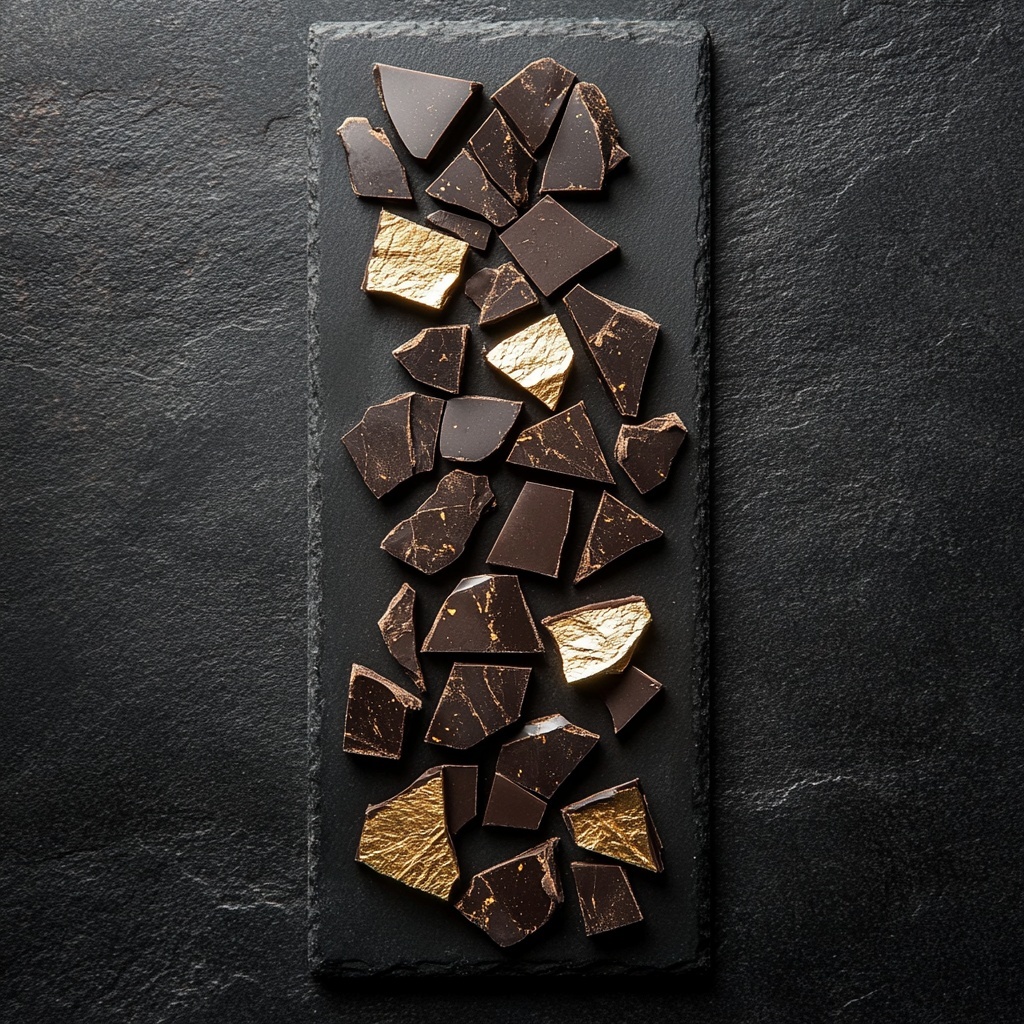
★ Technique Deep-Dive ★
The Art of Tempering Chocolate
Perfect Snap · Mirror Gloss · Silky Melt
Tempering is the single technique that separates professional chocolate work from everything else. It is not complicated — but it is precise. Master it once and every chocolate shell, bonbon, and dipped dessert you make will look and taste like it came from a Michelin-starred kitchen.
⏱ Time: 30–45 mins · 🌡 Precision required · ⭐ Difficulty: Intermediate
Why Tempered Chocolate Is Different
Break a piece of good chocolate and listen. That clean, sharp snap — followed by a melt that coats your tongue without a trace of grease — is not an accident. It is the result of tempered chocolate: chocolate whose cocoa butter crystals have been aligned into a precise, stable formation called Form V (Beta crystals).
Untempered chocolate, by contrast, sets with a dull, streaky finish, a waxy or grainy texture, and a melt that feels thick and heavy. This is what happens when you melt chocolate and simply let it cool — the cocoa butter crystallises randomly, forming an unstable structure. Tempering is the process of deliberately guiding the chocolate through a precise temperature curve to force only the correct crystals to form.
The result: a mirror gloss, a definitive snap, and a clean, rapid melt on the palate. Every professional chocolate shell, enrobed truffle, and moulded bonbon depends on this one technique.
What You Will Learn
✔️ The science behind tempering — why it works and what goes wrong
✔️ The three critical temperatures for dark, milk and white chocolate
✔️ Three tempering methods: tabling, seeding, and microwave
✔️ How to test your temper before committing
✔️ How to rescue chocolate that has gone out of temper
The Science in 60 Seconds
Cocoa butter can crystallise into six different forms (Form I through Form VI). Only Form V produces the glossy, snapping, stable chocolate we want. The tempering process works by:
01 — Melt
Heat the chocolate fully above 50°C to destroy all existing crystal structures. You start with a blank slate.
02 — Cool
Lower the temperature to a range where Form V crystals begin to form alongside undesirable forms. You are seeding the correct crystal structure.
03 — Reheat
Raise the temperature slightly to melt out the unstable crystals, leaving only the stable Form V. The chocolate is now in temper and ready to use.
The Temperature Chart
Dark Chocolate (70%+)
Melt to: 50–55°C
Cool to: 27–28°C
Reheat to: 31–32°C
Milk Chocolate
Melt to: 45–50°C
Cool to: 26–27°C
Reheat to: 29–30°C
White Chocolate
Melt to: 40–45°C
Cool to: 25–26°C
Reheat to: 27–28°C
Three Methods
Method 01 — Tabling (The Classic)
This is how chocolate is tempered in every professional kitchen. Melt your chocolate fully, then pour two-thirds onto a cold marble or granite surface. Using a palette knife and a bench scraper, work the chocolate continuously — spreading it out and folding it back over itself — until it thickens noticeably and reaches the cooling temperature for your chocolate type. Scrape it back into the bowl with the remaining warm third, stir thoroughly, and check the temperature. You should now be at the working temperature.
Best for: large volumes (400g+). Most control. Requires marble surface.
Method 02 — Seeding (Best for Home Use)
Melt two-thirds of your chocolate fully. Remove from heat and add the remaining one-third as finely chopped solid chocolate (or couverture callets). Stir continuously. The solid chocolate acts as a seed — it already contains stable Form V crystals, which it transfers to the melted mass as it dissolves. Keep stirring until the temperature drops to the working temperature. No marble slab required.
Best for: smaller quantities at home. Reliable and clean.
Method 03 — Microwave (The Fastest Route)
Use only with couverture callets (not chopped bars, which heat unevenly). Place callets in a microwave-safe bowl. Heat in 15-second bursts on 50% power, stirring thoroughly between each burst. Stop when approximately 75% of the callets are melted — residual heat will melt the rest. Stir until fully smooth and at the correct working temperature.
Best for: small quantities, speed. Less forgiving — use a thermometer.

Testing & Troubleshooting
The Knife Test
Dip the tip of a clean palette knife into your tempered chocolate and hold it for 30 seconds at room temperature. If the chocolate sets firm and glossy with no streaking, you are in temper. If it remains wet or sets dull, you are not.
Bloom — What Went Wrong
White streaks or a grey, matte surface after setting = fat bloom. The cocoa butter separated and re-crystallised incorrectly. Almost always caused by incorrect temperatures. Remelt and start again.
Seized Chocolate
A single drop of water will cause melted chocolate to seize into a stiff, grainy paste. All equipment must be completely dry. If it seizes, whisk in boiling water a teaspoon at a time to make a ganache — the chocolate cannot be recovered for tempering.
Out of Temper Mid-Use
If your chocolate thickens too much while working, it has dropped below the working temperature. Warm it very briefly over a bain-marie to 31–32°C (dark) and stir — this can bring it back without starting over.
The Kit You Need
Non-Negotiable
Digital probe thermometer
Marble or granite slab (tabling)
Bench scraper and palette knife
Heatproof bowl
Couverture chocolate (not baking chips)
Recommended
Chocolate moulds (polycarbonate)
Dipping forks
Acetate sheets
A cool, dry room (18–20°C ideal)
Infrared thermometer gun
The Right Chocolate
Use couverture — chocolate with a higher cocoa butter content (31–38%) than regular chocolate. Valrhona, Callebaut, and Cacao Barry are the professional standards. Callets (pre-portioned drops) are easiest to work with.
What to Make Once You’re in Temper
Chocolate Bonbons
Pour into polycarbonate moulds, tap out the excess to form a shell, fill with ganache or praline, and seal with a second layer. Unmould once set — they should release cleanly with a mirror finish.
Chocolate Decorations
Spread thinly on acetate, allow to semi-set, then cut or shape into shards, curls, or feathered designs. Essential for plating Michelin-level desserts.
Enrobing Truffles
Roll ganache centres in tempered chocolate using dipping forks. Tap gently to remove the excess. Allow to set on parchment. The snap when you bite through will be flawless.
Chocolate Spheres
Brush tempered chocolate into hemisphere moulds, allow to set, and join the halves with a warm palette knife. Used in Michelin kitchens worldwide — and now yours.
★ Continue the Series ★