Posted on

Liquorice & Carrot — Michelin Star Plated Dessert Recipe

★ Michelin Star Series ★

Liquorice & Carrot

Pastry Cream Espuma  ·  Carrot Cake  ·  Liquorice Ice Cream  ·  Carrot Sauce

An unexpected pairing of earthy liquorice and sweet carrot — a plated dessert of extraordinary depth and elegance that challenges everything you think you know about both ingredients.

⏱ Prep: 2 hours  ·  ⏲ Freeze: overnight  ·  🍲 Serves: 6  ·  ⭐ Difficulty: Advanced

Liquorice and Carrot Michelin Dessert Plate

The Story of This Plate

Liquorice and carrot is one of the great underexplored pairings in modern patisserie. Both carry an anise-adjacent earthiness, both have a natural sweetness that intensifies with heat, and together they create a dialogue on the plate that is simultaneously grounded and surprising.

The base is a tender, spiced carrot cake — moist, deep, and fragrant. Alongside it sits a quenelle of intensely flavoured liquorice ice cream, its cold creaminess cutting through the warmth of the plate. A swoosh of vibrant carrot sauce brings acidity and colour. The liquorice pastry cream espuma — aerated to a cloud-like lightness — is spooned tableside. And a single baton of glazed carrot provides the garnish: elegant, simple, precise.

This is fine dining at its most considered. Every element earns its place.


Ingredients

01 — Carrot Cake

200g plain flour
1½ tsp baking powder
½ tsp bicarbonate of soda
1½ tsp ground cinnamon
½ tsp ground ginger
¼ tsp ground nutmeg
Pinch of fine sea salt

180g light brown sugar
3 large eggs
180ml sunflower oil
1 tsp vanilla extract
250g finely grated carrot
60g toasted walnuts, chopped
Zest of 1 orange

02 — Liquorice Ice Cream

500ml whole milk
200ml double cream
6 egg yolks
140g caster sugar

30g pure liquorice paste
1 tsp black treacle
Pinch of sea salt
1 tsp anise extract (optional)

03 — Liquorice Pastry Cream Espuma

400ml whole milk
4 egg yolks
80g caster sugar
30g cornflour

25g liquorice paste
1 tsp vanilla extract
200ml double cream (lightly whipped)
2 gelatine leaves

Requires a cream whipper / iSi siphon with 2 N₂O charges

04 — Carrot Sauce

400ml fresh carrot juice
50g unsalted butter
1 tbsp honey
1 tsp fresh ginger, grated
Juice of ½ lemon
Pinch of salt

05 — Glazed Carrot Garnish

3 medium Chantenay carrots, peeled & halved lengthways
30g unsalted butter
1 tbsp honey
1 tbsp orange juice
Flaky sea salt & micro cress to finish

The Method

Step 01 — Liquorice Ice Cream (night before)

Warm milk and cream. Whisk in liquorice paste and treacle. Whisk yolks and sugar until pale, temper in hot cream. Cook to 82°C. Strain, cool over ice, churn and freeze overnight. Temper 5 minutes before serving.

Step 02 — Carrot Cake

Preheat oven to 170°C. Sift dry ingredients. Whisk sugar, eggs, oil and vanilla. Fold in dry mix, then carrot, walnuts and orange zest. Bake in a 20cm tin 30–35 mins. Cool, then cut into 6 neat 5cm cylinders with a ring cutter.

Step 03 — Liquorice Pastry Cream Espuma

Make a pastry cream with the milk, yolks, sugar and cornflour. Off heat, stir in liquorice paste, vanilla and soaked gelatine. Cool to 40°C, fold in whipped cream. Sieve into a cold iSi siphon, charge with 2 N₂O cartridges, refrigerate 2 hours minimum.

Step 04 — Carrot Sauce

Reduce carrot juice by half. Whisk in butter to emulsify. Add honey, ginger and lemon juice. Season and pass through a fine sieve. Keep warm.

Step 05 — Glazed Carrot Garnish

Melt butter with honey and orange juice. Add carrots cut-side down and cook 8–10 minutes until tender and lacquered. Season with flaky salt. Keep warm.

Step 06 — Plating (Michelin Standard)

Warm the plates. Place a carrot cake cylinder slightly left of centre. Sweep a bold arc of carrot sauce across the plate. Rest a quenelle of liquorice ice cream against the cake. Place one glazed carrot baton diagonally on top. Dispense espuma tableside in a generous cloud. Finish with micro cress and a flaky sea salt crystal on the ice cream.

Chef’s Secrets

Liquorice Quality

Use pure liquorice paste — not candy or syrup. Pontefract cake dissolved in warm cream, or Amarelli extract, gives the cleanest flavour.

Espuma Temperature

The siphon must be ice cold before charging. A warm siphon collapses the foam. Charge at least 2 hours ahead and dispense straight from the fridge.

Carrot Sauce Colour

Fresh-pressed carrot juice gives a luminous orange sauce. Reduce quickly over high heat to preserve its vivid colour and sweetness.

Plate Temperature

Warm plates to 40°C before service — warm to the touch but gentle enough not to melt the ice cream instantly.

Sommelier’s Note

Pairing Suggestion

A Pedro Ximénez sherry is extraordinary alongside this plate — its notes of dried fig, molasses and anise mirror the liquorice perfectly. Alternatively, a late harvest Riesling will lift the entire plate with gentle acidity.

Disclosure: This post may contain affiliate links. All Cookings earns a small commission at no extra cost to you.

FREE GUIDE ✦ INSTANT DOWNLOAD

Want to plate like a Michelin-star chef?

Get the free PDF guide — 5 plating secrets from a professional pastry kitchen, sent directly to your inbox.
Posted on — 1 Comment

Île Flottante Recipe — Poached Meringue with Praline & Crème Anglaise

★ Michelin Star Series ★

Île Flottante with Praline & Crème Anglaise

Spun Caramel  ·  Toasted Almond Praline  ·  Silky Vanilla Crème Anglaise

Billowing poached meringue islands floating on a sea of silky vanilla crème anglaise — one of the most elegant and technically demanding desserts in the French classical repertoire.

⏱ Prep: 45 mins  ·  ⏲ Chill: 1 hour  ·  ☁️ Serves: 6  ·  ⭐ Difficulty: Advanced

Ile Flottante with Praline and Creme Anglaise
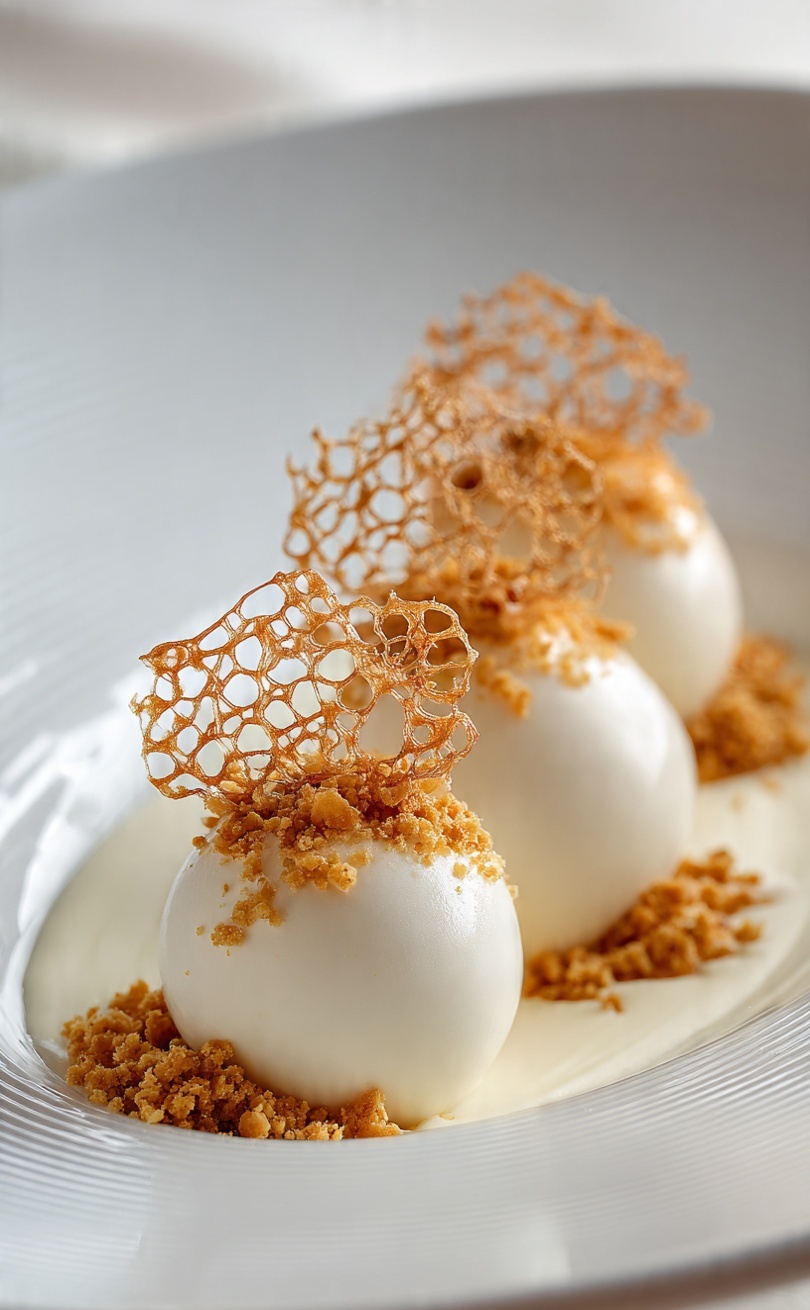
Île Flottante — billowing meringue islands, silky crème anglaise, spun caramel and toasted almond praline.

The Most Elegant Dessert in French Cuisine

Île flottante — floating island — is one of the crown jewels of French patisserie. Gossamer-light meringue, poached to cloud-like perfection, set adrift on a pool of the most silky vanilla crème anglaise imaginable. Finished with shards of spun caramel and a scattering of toasted almond praline, this is a dessert of theatrical elegance and extraordinary lightness.

You will find this on the menus of the finest brasseries in Paris and on the tasting menus of Michelin-starred kitchens. The technique is precise but learnable — and the result is unlike anything else in the dessert repertoire.

This is the full professional recipe — the kind served in starred kitchens — complete with exact timings, temperatures, and the plating technique used by trained pastry chefs.

What You Will Learn

✔️ How to make the perfect Italian meringue base
✔️ The exact poaching technique for cloud-like meringue islands
✔️ How to make a silky crème anglaise without scrambling the eggs
✔️ Toasted almond praline from scratch
✔️ The art of spun caramel (cage & threads)
✔️ Michelin-standard plating technique
✔️ Chef’s secrets for achieving the perfect wobble

Ingredients

The Meringue

4 large egg whites
150g caster sugar
1 tsp white wine vinegar
Pinch of fine salt

Crème Anglaise

600ml whole milk
6 large egg yolks
120g caster sugar
1 vanilla pod

Almond Praline

100g blanched almonds
150g caster sugar
50ml water
Pinch of sea salt

Spun Caramel

200g caster sugar
100ml water

Method

01 — Almond Praline

Toast the almonds in a dry pan over medium heat until golden and fragrant. In a separate saucepan, dissolve the sugar in the water and cook without stirring to a deep amber caramel (175°C). Remove from the heat, add the almonds and a pinch of sea salt, and stir to coat. Pour immediately onto a sheet of lightly oiled parchment. Leave to cool completely, then crush with a rolling pin to a coarse, irregular rubble.

02 — Crème Anglaise

Split the vanilla pod and scrape the seeds into the milk. Heat the milk over medium heat until it just reaches a simmer. Whisk the egg yolks with the caster sugar until pale and slightly thickened. Pour the hot milk onto the yolk mixture in a slow, steady stream, whisking constantly. Return to the pan over medium-low heat. Stir continuously with a wooden spoon, reaching into the corners of the pan, until the sauce thickens and coats the back of the spoon (82°C). Do not allow it to boil. Strain immediately into a cold bowl. Chill until needed.

03 — Poached Meringue Islands

Bring a wide, deep pan of water to a gentle, barely-there simmer. Whisk the egg whites with a pinch of salt to soft peaks. Add the caster sugar in a slow, steady stream, whisking continuously to a stiff, glossy meringue. Add the white wine vinegar and whisk for a further 10 seconds. Using two large spoons, shape oval quenelles of meringue and lower gently onto the simmering water. Poach for 2–3 minutes on each side. Remove carefully with a slotted spoon onto a clean kitchen towel to drain. Refrigerate until plating.

04 — Spun Caramel

Dissolve the sugar in the water in a clean, dry saucepan. Cook without stirring to a pale amber caramel (165°C). Remove from the heat and allow to cool for 1–2 minutes until it thickens slightly and begins to thread when lifted with a fork. Working quickly over two lightly oiled rolling pins (or the back of an oiled bowl), dip a fork into the caramel and wave it rapidly back and forth to create long golden threads. Gather into a nest and use immediately.

05 — Plating

Chill your serving bowls for at least 10 minutes. Pour a generous pool of cold crème anglaise into each bowl. Float a poached meringue island in the centre. Scatter almond praline around the base of the meringue and directly onto the anglaise. Crown the meringue with a small nest of spun caramel threads. Serve immediately — the caramel will soften within minutes.

Chef’s Note — The Anglaise Temperature

82°C is the sweet spot. Below it the sauce is too thin; above it the yolks begin to scramble. Use a digital thermometer and pull the pan from the heat a degree or two before it arrives — residual heat does the rest.

Chef’s Note — Meringue Water Temperature

The water must never actually boil. A rolling boil will batter the meringue and cause it to break apart. Keep it at the gentlest simmer — a few lazy bubbles rising to the surface is exactly right.

Chef’s Note — Caramel Timing

Spin the caramel at the very last moment, directly before service. Even a few minutes at room temperature will cause the threads to absorb moisture from the air and collapse. Practice the spinning motion before the caramel is ready.

⭐ Michelin Star Series

Also in the Series

Valrhona Chocolate Délice · Liquorice & Carrot Composed Plate · More coming soon

All Recipes →

Disclosure: This post may contain affiliate links. All Cookings earns a small commission at no extra cost to you.

FREE GUIDE ✦ INSTANT DOWNLOAD

Want to plate like a Michelin-star chef?

Get the free PDF guide — 5 plating secrets from a professional pastry kitchen, sent directly to your inbox.
Posted on — 1 Comment

Valrhona Chocolate Délice Recipe — Michelin Star Chocolate Tart with Gold Leaf

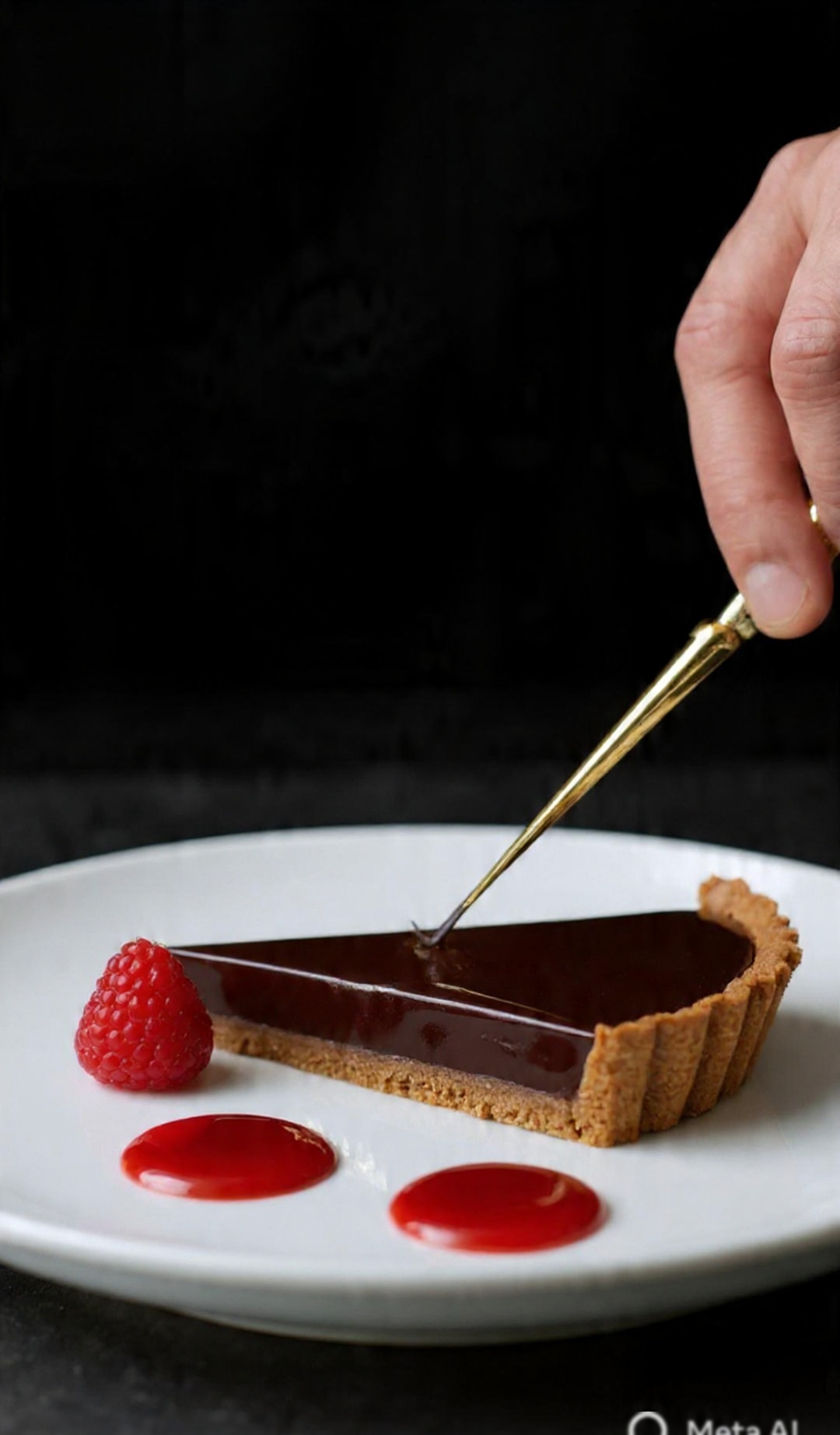
Michelin-star pastry: Valrhona chocolate délice with gold leaf by All Cookings

★ Michelin Star Series ★

Valrhona Chocolate Délice with Raspberry Coulis & Gold Leaf

The silkiest, most intensely chocolatey dessert in fine dining — perfected for the home kitchen.

⏱ Prep: 45 mins  ·  ⏲ Chill: 4 hours  ·  🍫 Serves: 8  ·  ⭐ Difficulty: Advanced

Valrhona Chocolate Délice hero

What is a Chocolate Délice?

A chocolate délice is the jewel of the fine dining dessert trolley. The word délice means delight in French — and this dessert earns that name in every possible way. It is a set chocolate ganache tart of extraordinary silkiness, made with the finest dark chocolate, double cream and a whisper of sea salt, poured into a buttery sweet pastry shell and chilled until it trembles.

You will find this dessert on the menus of Michelin-starred restaurants across Paris, London and New York — plated with mathematical precision, finished with edible gold leaf, and accompanied by a vivid raspberry coulis that cuts through the richness with electric acidity.

Today I am going to show you how to make it at home — with the exact technique, the exact ratios, and the exact finishing touches that separate a délice from every other chocolate dessert.

⭐ Why This Recipe

✔️ Michelin star technique
✔️ Valrhona 70% chocolate
✔️ Perfect for dinner parties
✔️ Make-ahead friendly
✔️ Restaurant plating guide
✔️ Raspberry coulis included
✔️ Gold leaf finishing touch
✔️ Gluten-free option included


Ingredients

Pâte Sucrée

200g plain flour
100g unsalted butter, cold & cubed
80g icing sugar, sifted
2 large egg yolks
1 tsp vanilla extract
Pinch of fine sea salt
2–3 tbsp ice cold water

Chocolate Délice Filling

300g Valrhona 70% dark chocolate
300ml double cream
50ml whole milk
3 large eggs, room temperature
50g unsalted butter, softened
1 tsp flaky sea salt (Maldon)
1 tsp vanilla bean paste

Raspberry Coulis & Finish

250g fresh raspberries
50g caster sugar
1 tbsp lemon juice
Edible gold leaf sheets
Fresh raspberries
Micro herbs
Flaky sea salt crystals

Valrhona Chocolate Delice slice with gold leaf
The ganache must be poured at exactly 35°C — the most critical step in the entire recipe.

The Method

Step 1. In a food processor, pulse the flour, icing sugar and salt together. Add the cold cubed butter and pulse until the mixture resembles fine breadcrumbs…

🔒 Full Method Locked

Chef’s Coaching Recipe & Audio Walkthrough

Unlock the complete step-by-step method, plus a real-time guided audio walkthrough where a pastry chef coaches you through every stage — including the critical 35°C ganache checkpoint.

$39

Buy Now — Unlock Recipe

The Délice Family

Two More Ways to Make This

Salted Caramel Chocolate Délice — the same silky ganache, poured over a layer of deep amber caramel and finished with Maldon salt.

Vegan Chocolate Délice — the exact same set-ganache technique, rebuilt entirely plant-based with coconut cream and aquafaba.

The Professional Kitchen Toolkit

🍫 Valrhona 70% Chocolate
View on Amazon →

🥧 Loose-Bottomed Tart Tin
View on Amazon →

🌡️ Digital Thermometer
View on Amazon →

🥄 Fine Mesh Sieve
View on Amazon →

✨ Edible Gold Leaf Sheets
View on Amazon →

🧰 Plating Tweezers
View on Amazon →

Disclosure: This post contains affiliate links. All Cookings earns a small commission at no extra cost to you.

FREE GUIDE ✦ INSTANT DOWNLOAD

Want to plate like a Michelin-star chef?

Get the free PDF guide — 5 plating secrets from a professional pastry kitchen, sent directly to your inbox.

Posted on

Saffron & Honey Kouign-Amann — The Laminated Luxury Series

The Laminated Luxury Series — No. 3 of 8

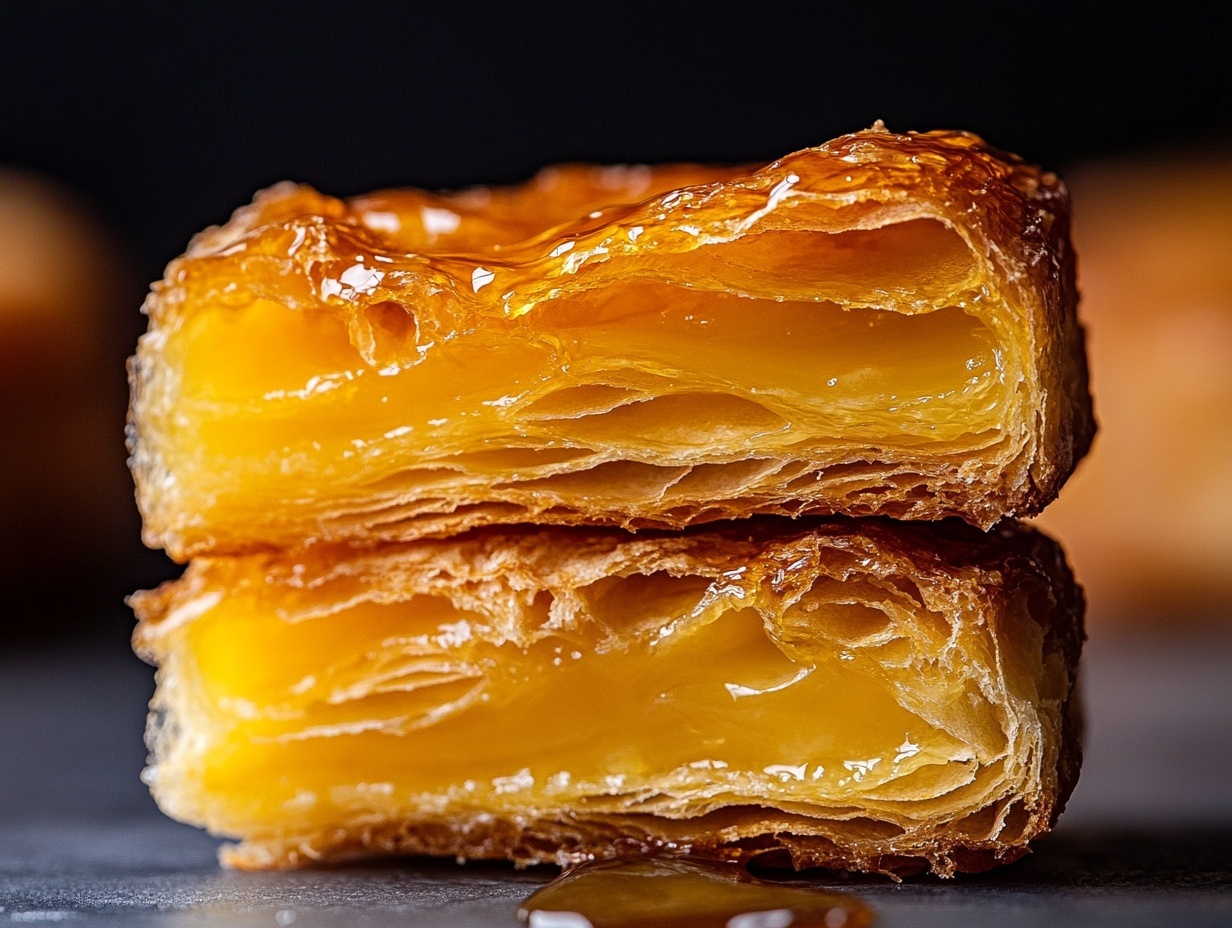
Kouign-amann — Breton for butter cake — is laminated dough folded with sugar and baked until the base caramelises into a lacquered, crackling shell. This version infuses the butter block with Persian saffron before lamination, perfuming every layer with the world’s most precious spice. Finished with raw honeycomb and edible gold, it is a pastry that exists somewhere between Brittany and the Gulf.

The saffron does not colour the dough dramatically — its role is aromatic. The honey does not simply sweeten — it deepens and perfumes. Together they create something that smells and tastes like nothing else in pastry.


Chef’s Note

Persian saffron is worth sourcing properly. The threads should be a deep crimson, not pale orange. Bloom them in 2 tablespoons of warm water for 20 minutes before use — this releases the colour and fragrance. Add the bloomed saffron directly to the softened butter and mix well before shaping the beurrage.

The caramelisation stage is the moment of greatest risk. The sugar can go from perfect amber to bitter in seconds. Watch closely and pull the tin from the oven at the first sign of deep mahogany at the edges.


Ingredients

The Dough

  • 500g strong bread flour
  • 10g fine sea salt
  • 60g caster sugar
  • 10g instant yeast
  • 300ml whole milk, cold
  • 30g unsalted butter, softened

The Saffron Butter Block (Beurrage)

  • 280g European-style unsalted butter (84% fat), cold
  • 1/4 tsp high-quality Persian saffron threads, bloomed in 2 tbsp warm water

The Sugar Layer

  • 150g caster sugar
  • 2 tbsp raw honey
  • Pinch of fleur de sel

To Finish

  • 1 egg yolk + 1 tbsp cream (egg wash)
  • Raw honeycomb, to serve
  • Edible gold leaf
  • Fleur de sel

Method

Day 1 — The Détrempe & Saffron Beurrage

Make the détrempe: combine flour, salt, and sugar. Dissolve yeast in cold milk, combine with dry ingredients, add butter, knead 8 minutes until smooth. Refrigerate overnight. Beat the softened butter with the bloomed saffron liquid until fully absorbed and evenly coloured. Shape into a 20cm square between parchment sheets. Refrigerate alongside the dough.

Day 2 — Lamination with Sugar

Perform two double folds (not three — kouign-amann needs fewer, more open layers). On the final roll, scatter the caster sugar evenly across the dough surface and fold it in. The sugar will become incorporated between the layers as you work. Rest 30 minutes.

Shaping & Proofing

Roll to a 24cm circle. Generously butter a 22cm cake tin, line the base with a circle of parchment. Drizzle the honey across the base and scatter with fleur de sel. Lay the dough circle on top, tucking the edges under slightly. Proof at 22°C for 1.5–2 hours — slightly cooler than usual to prevent the sugar from dissolving prematurely.

Baking

Preheat oven to 200°C. Brush with egg wash. Bake for 25–30 minutes until the top is deeply golden and the base is caramelised to dark amber when checked by lifting the edge with a palette knife. The sugar should be crackling and lacquered, not sticky. Remove from the oven, rest for exactly 5 minutes, then invert onto a rack immediately. Any longer and the caramel will set and the pastry will stick permanently.

Finishing

While still warm, place a shard of raw honeycomb on top. The heat will soften it slightly, causing the honey to weep onto the surface. Lay edible gold leaf across the honeycomb. Finish with a scatter of fleur de sel. Serve warm, within 30 minutes of baking — the caramel shell is at its finest while it still crackles.


The Laminated Luxury Series

← No. 2 — Tahitian Vanilla Mille-Feuille  |  You are reading No. 3 — Saffron & Honey Kouign-Amann
Next: No. 4 — Black Sesame Paris-Brest →

Posted on

Tahitian Vanilla Mille-Feuille Croissant — The Laminated Luxury Series

The Laminated Luxury Series — No. 2 of 8

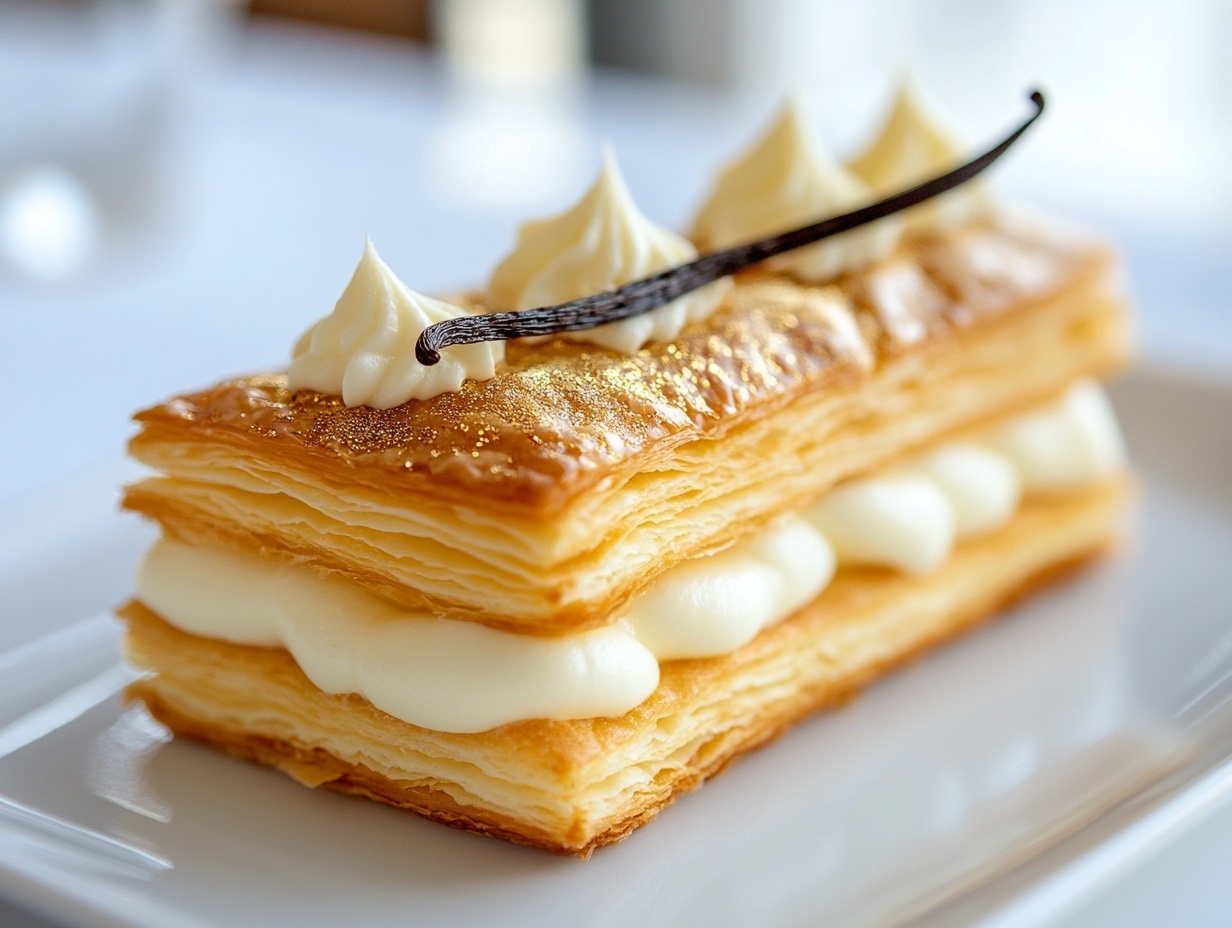
If the Noir Croissant is darkness, this is light. The Tahitian Vanilla Mille-Feuille Croissant takes the most revered ingredient in patisserie — the Tahitian vanilla bean, with its floral, cherry-like complexity — and anchors it inside shatteringly crisp laminated layers, bound together with a diplomat cream of exceptional delicacy.

Mille-feuille means a thousand leaves. Here, those leaves are croissant dough — caramelised, lacquered, and finished with edible gold dust. This is the series at its most classical.


Chef’s Note

Tahitian vanilla is not interchangeable with Madagascar vanilla. It is softer, more floral — less sharp. It perfumes the cream rather than asserting itself. Use real pods, not extract. Split them lengthways, scrape every seed, and steep the pods in the warm milk for a minimum of 20 minutes. The difference is not subtle.

The croissant layers here are baked flatter than usual — pressed lightly before baking to encourage the mille-feuille effect. The result is a pastry of extraordinary crunch and layering, designed to shatter on the first bite and yield something impossibly soft inside.


Ingredients

The Dough

  • 500g strong bread flour
  • 10g fine sea salt
  • 80g caster sugar
  • 10g instant yeast
  • 300ml whole milk, cold
  • 30g unsalted butter, softened

The Butter Block (Beurrage)

  • 280g European-style unsalted butter (84% fat), cold

Tahitian Vanilla Diplomat Cream

  • 500ml whole milk
  • 2 Tahitian vanilla pods, split and scraped
  • 5 egg yolks
  • 120g caster sugar
  • 40g cornflour
  • 30g unsalted butter, cold and cubed
  • 200ml double cream, whipped to soft peaks

Lacquer Glaze

  • 100g caster sugar
  • 30ml water
  • 1 tsp glucose syrup

To Finish

  • 1 egg yolk + 1 tbsp cream (egg wash)
  • Edible gold dust
  • Vanilla pod, halved, to garnish

Method

Day 1 — The Détrempe & Beurrage

Combine flour, salt, and sugar. Dissolve yeast in the cold milk, then combine with the dry ingredients. Add the softened butter and knead for 8 minutes until smooth and elastic. Wrap and refrigerate overnight. Shape the cold butter block into a 20cm square and refrigerate alongside the dough.

Day 2 — Lamination

Perform three double folds with 30-minute rests between each fold, keeping everything below 18°C. After the final fold, rest for at least 1 hour.

Shaping — The Mille-Feuille Method

Roll the laminated dough to 4mm. Rather than rolling into the traditional crescent shape, cut into rectangles (12cm × 8cm). Stack two rectangles per pastry with a light brushing of egg wash between them. Place on lined trays and proof at 24°C for 1.5–2 hours. Before baking, place a second sheet of parchment on top and weigh down lightly with a flat baking tray — this creates the compressed, layered mille-feuille effect.

Baking & Glazing

Preheat oven to 185°C (fan). Brush with egg wash, then bake with the weighted tray on top for 15 minutes. Remove the top tray and bake a further 8–10 minutes until deeply golden and lacquered. While still hot, brush immediately with the sugar glaze (combine sugar, water, and glucose, simmer until syrupy). The glaze will set to a glassy finish as it cools.

The Diplomat Cream

Steep the split vanilla pods in the warm milk for 20 minutes. Whisk the egg yolks with sugar and cornflour. Bring the milk back to a simmer, remove pods, then pour over the egg mixture in a steady stream. Return to the pan and cook over medium heat, whisking constantly, until thick and glossy. Remove from heat, whisk in the cold butter. Press cling film directly onto the surface and cool completely. Once cold, fold in the whipped cream in two additions to create a light, airy diplomat cream.

Assembly

Once the pastries are completely cool, split horizontally with a serrated knife. Pipe the diplomat cream generously across the base — use a large star nozzle for visual drama. Replace the top layer. Dust liberally with edible gold dust and place a halved vanilla pod across the top. Serve within 2 hours of assembly for maximum crunch.


Technique Notes

The weighted bake. Pressing the dough during baking forces the layers to caramelise against each other rather than puffing apart. The result is a pastry that is more mille-feuille than croissant — dense with crunch, not airy. Do not skip this step.

The glaze timing. The sugar glaze must go on immediately out of the oven while the surface is still hot. A cold pastry will not absorb the glaze — it will pool and remain sticky. Work quickly.

Diplomat vs. pastry cream. Diplomat cream is pastry cream lightened with whipped cream. Do not substitute with pastry cream alone — it is too dense and will overwhelm the delicate vanilla perfume. The lightness of the diplomat cream is essential to the balance of this pastry.


Facebook Caption

The Laminated Luxury Series continues.

Crisp laminated layers. Tahitian vanilla diplomat cream. Edible gold dust.

This is the Tahitian Vanilla Mille-Feuille Croissant — and it tastes exactly as extraordinary as it looks.

Full recipe on the blog. Link in bio. ✨🥐


The Laminated Luxury Series

← No. 1 — Noir Croissant  |  You are reading No. 2 — Tahitian Vanilla Mille-Feuille
Next: No. 3 — Saffron & Honey Kouign-Amann →

View the full series: French Classics | Michelin Star Series


🖤 Want All 8 Recipes in One Place?

The complete Laminated Luxury Series — all 8 Michelin-level croissant recipes, technique notes, plating guides, and photography direction — is available as a premium recipe collection in our shop.

Browse the Shop →

Posted on

Noir Croissant Recipe — Black Cocoa Laminated Croissant with Dark Chocolate Ganache

The Laminated Luxury Series — No. 1 of 8

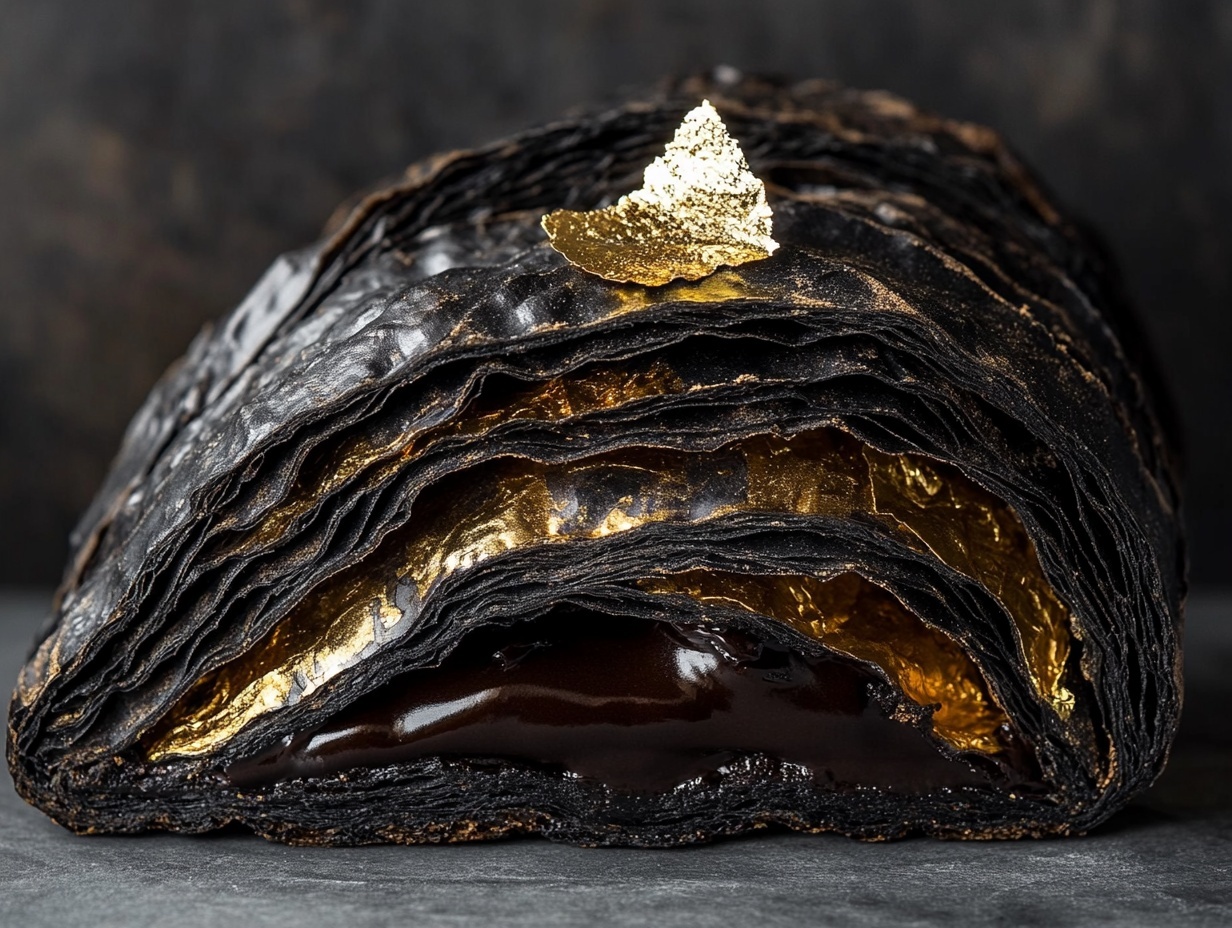
Some pastries announce themselves quietly. The Noir Croissant does not. Built from black cocoa-laminated dough, filled with a bittersweet 85% dark chocolate ganache, and finished with a whisper of edible gold leaf — this is a croissant that commands the room.

This recipe opens the Laminated Luxury Series — eight recipes that treat the croissant not as a breakfast staple, but as a canvas for Michelin-level patisserie.


Chef’s Note

The key to the Noir Croissant is restraint. The black cocoa doesn’t just colour the dough — it deepens the flavour, adding a subtle bitterness that balances the richness of the ganache. Laminate cold, rest often, and bake until the exterior is shatteringly crisp. A soggy croissant is a failed croissant.

The gold leaf is not decoration. It is a statement.


Ingredients

The Dough

  • 500g strong bread flour
  • 25g black cocoa powder
  • 10g fine sea salt
  • 80g caster sugar
  • 10g instant yeast
  • 300ml whole milk, cold
  • 30g unsalted butter, softened

The Butter Block (Beurrage)

  • 280g European-style unsalted butter (84% fat), cold
  • 10g black cocoa powder

Dark Chocolate Ganache Filling

  • 200g 85% dark chocolate, finely chopped
  • 180ml double cream
  • 20g unsalted butter
  • 1 tsp fleur de sel

To Finish

  • 1 egg yolk + 1 tbsp cream (egg wash)
  • Edible gold leaf
  • Fleur de sel, to garnish

Method

Day 1 — The Détrempe

Whisk together the flour, black cocoa, salt, and sugar. Dissolve the yeast in the cold milk, then combine with the dry ingredients. Mix until a shaggy dough forms, then add the softened butter. Knead for 8 minutes until smooth. Wrap tightly in cling film and refrigerate overnight.

Day 1 — The Beurrage

Beat the cold butter with black cocoa until fully combined and pliable. Shape into a 20cm square between two sheets of parchment. Refrigerate alongside the dough.

Day 2 — Lamination (3 × Double Folds)

Encase the butter block in the dough, then perform three double folds (book folds), resting in the refrigerator for 30 minutes between each fold. After the final fold, rest for a minimum of 1 hour. Target: 128 layers of butter. Do not rush this.

Shaping & Proofing

Roll the laminated dough to 4mm thickness. Cut into long triangles (base 10cm, height 22cm). Roll tightly from base to tip, placing point-side down on lined baking trays. Proof at 24°C for 2–2.5 hours until visibly puffed and the layers are clearly defined.

Baking

Preheat the oven to 190°C (fan). Brush gently with egg wash — do not let it drip into the layers. Bake for 18–20 minutes until deeply dark and shatteringly crisp. Cool completely on a wire rack before filling.

The Ganache

Heat the cream until just simmering. Pour over the chopped chocolate in three additions, stirring from the centre out. Add the butter and stir until glossy. Season with fleur de sel. Allow to set at room temperature until pipeable (approximately 2 hours).

Assembly

Cut a slit along the base of each croissant. Pipe the ganache generously inside. Place a single sheet of edible gold leaf across the top. Finish with a pinch of fleur de sel.


Technique Notes

Temperature is everything. Lamination fails when butter melts into dough. Keep everything below 18°C throughout. If the dough feels greasy, stop and refrigerate immediately for 20 minutes.

The black cocoa. Dutch-processed to an extreme degree — it carries almost no fat, so it won’t interfere with the gluten structure. Do not substitute with regular cocoa.

Baking dark doughs. The black colour makes it difficult to judge doneness by eye. Listen — a properly baked croissant sounds hollow when tapped on the base.


The Laminated Luxury Series

You are reading No. 1 — Noir Croissant
Next: No. 2 — Tahitian Vanilla Mille-Feuille Croissant →

View the full series: French Classics | Michelin Star Series