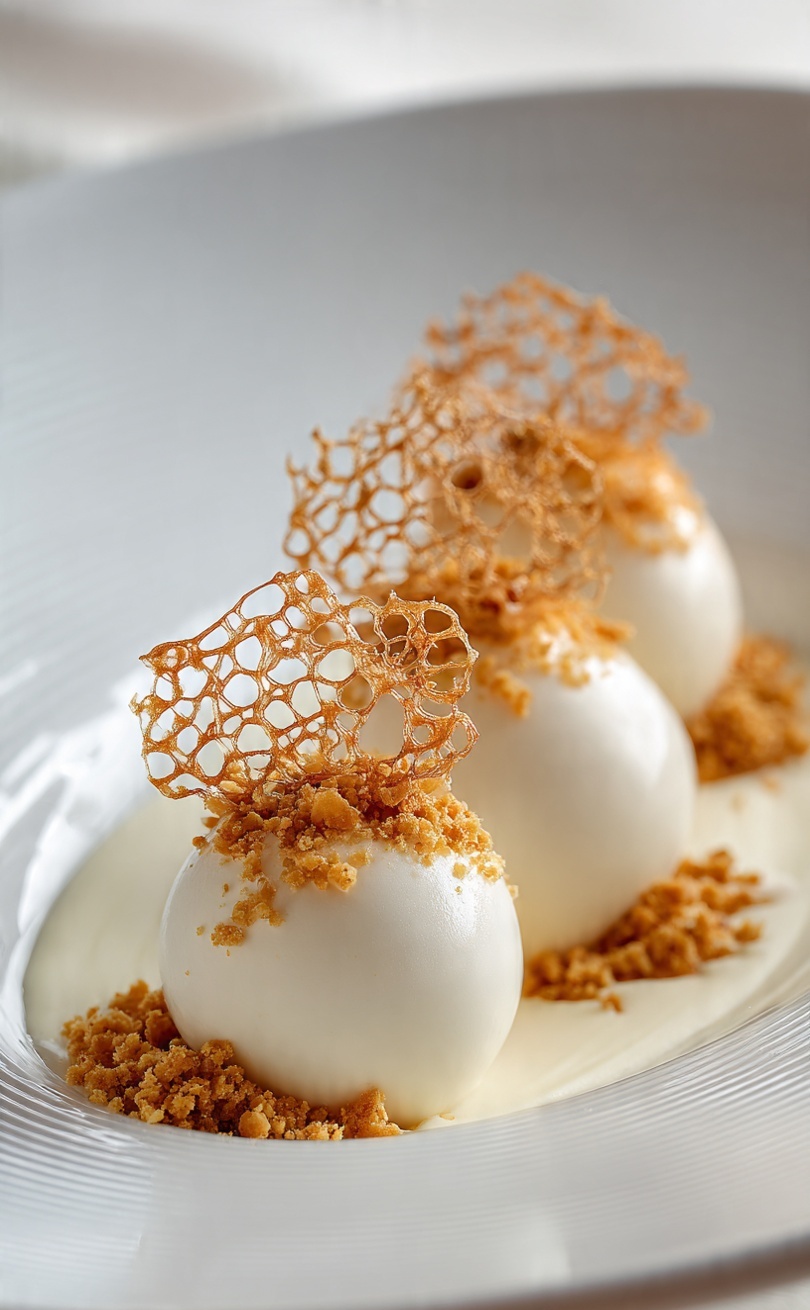
Part of the Michelin Star Series.
Temperature is usually discussed as a serving concern. At the Michelin level this is the wrong frame entirely. Temperature at the highest level of pastry is an ingredient: added to a dish with the same deliberateness as salt or acid, managed with the same precision.
Why Temperature Tastes
Cold suppresses sweetness. Heat amplifies volatile aromatic compounds. Fat texture is entirely temperature-dependent. These are not incidental variations — they are flavour decisions.
The Architecture of Contrast
The most sophisticated use of temperature in fine-dining pastry is the managed contrast — two elements on the same plate at temperatures far enough apart that the gap between them becomes part of the dish. The canonical example is the warm fondant against the cold sorbet: the heat partially melts the cold element on contact, creating a third temperature that exists only briefly in time. That is what great temperature contrasts are engineering.
Cold as Structure
Cold is also a structural element. A chocolate marquise at four degrees holds its edge; at twelve it begins to weep. A panna cotta unmoulded at three degrees stands; at fifteen it collapses. This is why serious pastry kitchens chill plates before service. The plate is not a neutral surface — it is part of the thermal system.
Heat as Drama
If cold is structure, heat is drama. Heat generates aroma, and aroma reaches the diner before the fork does. The sequence in which a complex dessert reveals itself — first through smell, then sight, then the first mouthful — is designed. Temperature is one of the primary tools through which that sequence is controlled.
Precision and Margin
The practical challenge of temperature as ingredient is that it has the narrowest margin of any element in pastry. At the restaurants where this is done best, the temperature of every component is measured before plating as standard procedure. Temperature, understood correctly, demands the same rigour as salt or acid. It is not a variable to be managed. It is a decision to be made.
This post is part of the Michelin Star Series. Read the companion pieces — The Evolution of Modern Dessert Plating and The Grammar of Negative Space — for the broader context.
FREE GUIDE ✦ INSTANT DOWNLOAD
Want to plate like a Michelin-star chef?
Get the free PDF guide — 5 plating secrets from a professional pastry kitchen, sent directly to your inbox.
Discover more from ALL COOKINGS
Subscribe to get the latest posts sent to your email.