Posted on

Authentic Tiramisu Recipe — Classic Italian Mascarpone Dessert

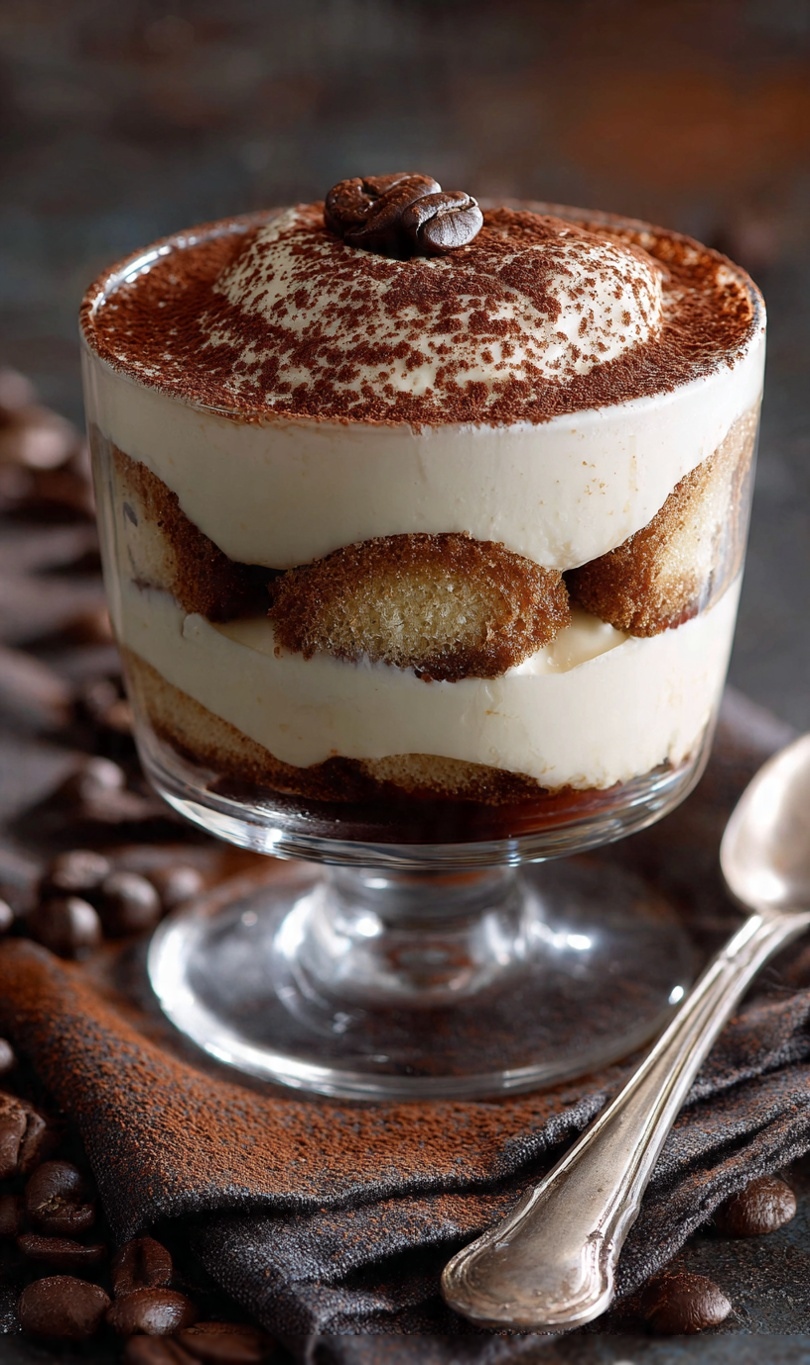
Classic Italian tiramisu with cocoa dusting, ladyfingers and mascarpone layers
The real tiramisu — six perfect ingredients, layered to perfection.

Few desserts have conquered the world quite like tiramisu. Creamy, coffee-soaked, dusted with cocoa — it is Italy’s gift to the dessert world. Yet so many versions fall flat: too sweet, too soggy, or missing that essential depth of espresso. This is the recipe that gets it right every single time.

The Authentic Story Behind Tiramisu

Tiramisu was invented in the 1960s at Le Beccherie restaurant in Treviso, northern Italy. Its name translates literally as “pick me up” — a nod to the energising combination of espresso and sugar. The original recipe uses only six ingredients: egg yolks, sugar, mascarpone, savoiardi biscuits, espresso, and cocoa powder. No cream. No gelatine. No shortcuts.

Ingredients (Serves 8)

  • 6 large egg yolks, room temperature
  • 150g (¾ cup) caster sugar
  • 500g (2 cups) mascarpone cheese, cold
  • 300ml strong espresso or very strong coffee, cooled
  • 2 tbsp Marsala wine or dark rum (optional but traditional)
  • 24–30 savoiardi (ladyfinger biscuits)
  • Generous unsweetened cocoa powder, for dusting

Method

Step 1: The Zabaglione Base

Whisk the egg yolks and sugar together in a heatproof bowl set over a pot of barely simmering water (bain-marie). Whisk constantly for 8–10 minutes until the mixture is pale, thick, and has doubled in volume. It should hold a ribbon when the whisk is lifted. Remove from heat and allow to cool to room temperature.

Step 2: Fold in the Mascarpone

Add the cold mascarpone to the cooled zabaglione in three additions, folding gently with a spatula until just smooth and no streaks remain. Do not overwork it or the mixture can split. The result should be thick, glossy, and spoonable.

Step 3: Soak the Savoiardi

Combine the cooled espresso with the Marsala or rum. Working quickly, dip each savoiardo for no more than 1–2 seconds per side — they should be moistened but not saturated. A soggy biscuit is the most common tiramisu mistake.

Step 4: Layer and Chill

Spread half the mascarpone cream over the first layer of biscuits. Add a second layer of soaked savoiardi, then top with the remaining cream. Cover and refrigerate for at least 6 hours — overnight is best.

Step 5: Dust and Serve

Tiramisu layers of mascarpone cream and espresso soaked savoiardi
The finished tiramisu — beautiful layers of cream, biscuit and cocoa.

Just before serving, dust generously with high-quality unsweetened cocoa through a fine sieve. Cut into clean portions with a sharp knife wiped between slices. Serve cold.

Equipment That Makes a Difference

Pro Tips for the Best Tiramisu

  • Use real espresso. Instant coffee produces a flat, bitter result.
  • Do not skip the bain-marie. It creates the thick, stable base the cream needs.
  • Chill overnight. A 6-hour minimum rest is non-negotiable.
  • Dust just before serving. Cocoa applied too early loses its matte appearance.
  • Quality mascarpone matters. Look for Italian-imported mascarpone.

Follow us on Instagram and Facebook for daily recipe updates.

Disclosure: This post contains affiliate links. If you purchase through these links, All Cookings earns a small commission at no extra cost to you. We only recommend products we genuinely use and love.

Posted on

Authentic Sicilian Cannoli Recipe — Crispy Shells & Sweet Ricotta Filling

A journey to Sicili with one bite

The photo shows three classic Sicilian cannoli, one with chopped green pistachios at the ends, one loaded with dark chocolate chips, and one featuring candied orange peel or fruit pieces. These are the most beloved variations in Sicily, where the crisp, bubbly fried shells contrast with creamy ricotta filling.a03dd0
Authentic Sicilian Cannoli (Makes about 12-15 cannoli)


Ingredients for the Cannoli Shells (Crostelle)

2 cups (250g) all-purpose flour
2 tablespoons (25-30g) granulated sugar
2 tablespoons (30g) lard (traditional for bubbly texture) or unsalted butter, softened
1 large egg (or 2 egg yolks for richer dough)
3-4 tablespoons Marsala wine (or dry white wine/vinegar mix)
1 tablespoon white wine vinegar or apple cider vinegar
Pinch of salt
½ teaspoon ground cinnamon
Optional: ½ teaspoon unsweetened cocoa powder (for subtle color) and zest of ½ orange
1 egg white (for sealing the dough)
Neutral oil for frying (vegetable, canola, or peanut; about 4-6 cups)

Special equipment: Metal cannoli tubes (4-6 inches long), rolling pin or pasta machine, deep-fry thermometer.
Ingredients for the Ricotta Filling (Base)
2 lbs (900g-1kg) fresh ricotta cheese (sheep’s milk preferred for tanginess and authenticity; cow’s milk works well too), drained overnight in a fine-mesh strainer or cheesecloth in the fridge
¾-1 cup (90-120g) powdered sugar (adjust to taste; start lower)
1 teaspoon vanilla extract or 1 tablespoon orange blossom water (or rose water)
Zest of 1 lemon or orange (optional, for brightness)
Pinch of ground cinnamon


Variations for the three styles in the photo (mix into the base filling or use as garnishes):
Pistachio cannolo: Stir in 2-3 tablespoons pistachio paste or finely chopped unsalted pistachios (Bronte pistachios are ideal). Garnish ends heavily with more chopped pistachios.
Chocolate cannolo: Fold in ½-¾ cup mini dark chocolate chips or chopped bittersweet chocolate. Garnish ends with extra chocolate chips.
Candied fruit/orange cannolo: Mix in ⅓-½ cup chopped candied orange peel, citron, or mixed candied fruit. Garnish with extra candied pieces.


For Garnishing (All Styles)
Extra chopped pistachios, mini chocolate chips, or candied orange peel
Powdered sugar for dusting


Step-by-Step Instructions
Prepare the ricotta (do this the day before): Place the ricotta in a fine-mesh strainer lined with cheesecloth over a bowl. Cover and refrigerate overnight (or at least 4-6 hours). This removes excess whey so the filling stays firm and doesn’t make the shells soggy. You should end up with a thick, scoopable cheese


Make the dough for the shells: In a large bowl, whisk together the flour, sugar, salt, cinnamon, and cocoa (if using). Add the lard/butter and rub it in with your fingers until it resembles coarse crumbs. Make a well in the center and add the egg (or yolks), Marsala wine, and vinegar. Mix until a shaggy dough forms, then knead on a lightly floured surface for 5-8 minutes until smooth and elastic (it should be firm but not sticky). Wrap in plastic and let rest at room temperature for at least 1-2 hours (or up to 24 hours in the fridge). The resting time and acid/wine help create those signature bubbles when fried
Roll and shape the shells: Divide the rested dough into 4 pieces. Roll each piece very thin (about 1/16 inch or the thickness of a credit card) using a rolling pin or pasta machine (setting 6-7). Cut into 3.5-4 inch rounds or ovals with a cookie cutter or glass.
Wrap each round around a cannoli tube diagonally. Brush one overlapping edge with egg white (as “glue”) and press firmly to seal—avoid getting egg white on the tube itself. Repeat with all dough.
Fry the shells: Heat oil in a deep pot or fryer to 350-375°F (175-190°C). Fry 2-3 shells at a time (still on the tubes) for 1-2 minutes per side until golden brown and bubbly. Use tongs to turn. They should be crisp and deep golden. Drain on a wire rack or paper towels. Let cool completely, then gently slide off the tubes. Shells can be stored in an airtight container for up to 2 days.


Make the filling: In a bowl, beat the drained ricotta with powdered sugar, vanilla/orange blossom water, zest, and cinnamon until smooth and creamy (use a stand mixer or whisk vigorously). Do not overmix or it can become watery. Fold in your chosen mix-ins (chocolate chips, pistachios, or candied fruit) gently. Taste and adjust sweetness. Chill for at least 30-60 minutes.


Fill and assemble (just before serving): Use a pastry bag (or zip-top bag with corner snipped) to pipe the filling into both ends of each shell, filling generously so it mounds slightly. Dip or sprinkle the ends according to the variation:
Pistachio: Roll ends in chopped pistachios.
Chocolate: Press extra chocolate chips into the ends.
Candied: Top with candied orange pieces.
Dust all cannoli lightly with powdered sugar right before serving.


Tips for Success
Crisp vs. soggy: Fill the shells no more than 1-2 hours before eating—the ricotta will soften the pastry over time. For parties, set out shells and filling separately so guests can assemble.
Bubbly texture: Lard, Marsala, and vinegar are key traditional secrets for the lacy, crisp shell.


Authenticity notes:

In Sicily, fillings vary by region—Palermo loves candied fruit, eastern areas favor pistachios, and chocolate is popular everywhere. Sheep’s ricotta gives a superior tangy flavor.
Make-ahead: Shells and filling (unmixed) store well. Fried shells keep 1-2 days at room temp.
Safety: Use a thermometer for frying to avoid burning or undercooking.
Serve immediately on a beautiful plate, perhaps with espresso or a glass of sweet Marsala wine. These are best enjoyed fresh—the contrast of crunchy shell and silky filling is unbeatable.
Buon appetito!